
The AI tool market is overwhelming. Hundreds of platforms promise productivity, but most entrepreneurs end up with subscription bloat and minimal impact. The solution? A lean, focused stack covering research, drafting, visuals, and distribution. Start with 2-3 core tools that integrate naturally into your workflow. Avoid chasing every new release. Instead, build a reliable system that delivers consistent results a principle we explore deeply in our ultimate guide to AI productivity for content creation.
The 4 essential categories of a high-impact AI stack
Every functional content system needs four capabilities. Research to find topics worth covering. Drafting to transform ideas into structured content. Design to make content visually engaging. Distribution to get content in front of your audience.
Most entrepreneurs overcomplicate this. They want specialized tools for every micro-task. A tool for headlines. Another for outlines. A third for editing. A fourth for formatting.
But complexity kills consistency. The more tools you juggle, the more friction you create. The more friction you create, the less content you publish.
One founder I know runs his entire content operation with two platforms. ChatGPT for research and drafting. Notion for organization and collaboration. That’s it. Two tools covering 70% of his content pipeline.
He publishes twice per week. Every week. Without fail. His simple stack removes decision fatigue and keeps him focused on execution.
This doesn’t mean you can’t add specialized tools later. It means you start with a foundation that works before expanding. Master the basics before chasing advanced features.
AI tools for keyword research and topic discovery
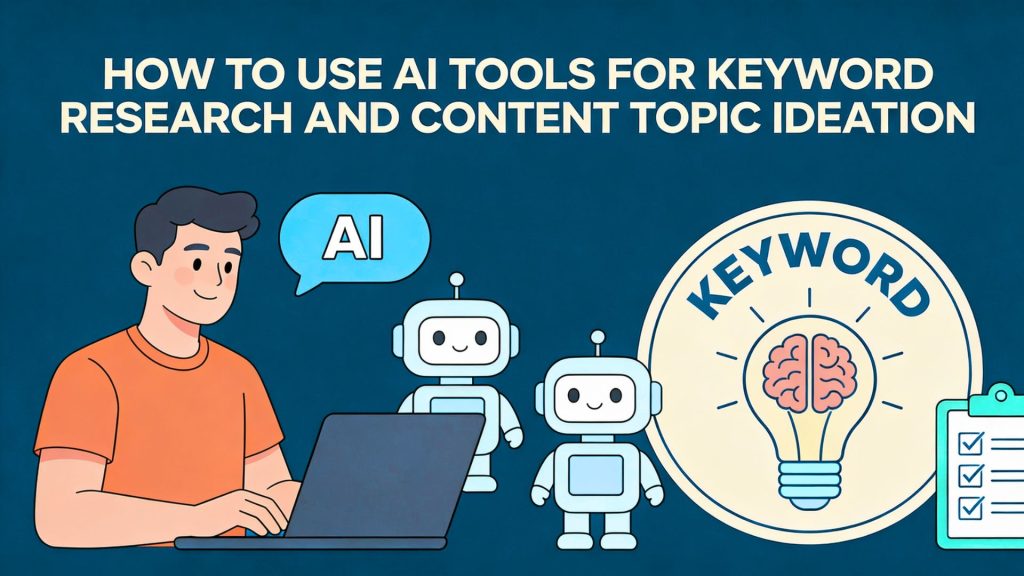
Finding the right topics used to take hours. You’d search forums. Read competitor blogs. Guess what your audience wanted to know. The process was slow and mostly guesswork.
Now you can generate 20 SEO-friendly topic ideas in five minutes. You feed your core pillar into a research tool and get back a structured list of subtopics, questions, and angles.
Tools like Answer the Public or SEMrush show you exactly what people are searching for. You stop guessing and start responding to real demand.
One entrepreneur shifted her entire content strategy after running keyword research. She discovered that her audience wasn’t searching for the topics she kept writing about. They were asking completely different questions.
She adjusted her content calendar based on actual search data. Her organic traffic tripled in two months because she finally gave people what they were actively looking for.
The key is using research tools to inform strategy, not replace it. The tool shows you what’s being searched. You decide what aligns with your business goals.
Research tools worth considering: ChatGPT for brainstorming, Google Trends for timing, Answer the Public for question discovery. Pick one and learn it deeply before adding others.
AI writing assistants for drafting and editing content
Writing assistants changed everything for time-constrained founders. A newsletter that used to take 90 minutes now takes 15 minutes to draft. The quality stays high because you’re editing AI output instead of staring at blank pages.
This is where most entrepreneurs see immediate ROI. You cut content creation time by 60% to 70% without sacrificing your voice or message.
One founder described it like this: “I used to spend an hour getting the first paragraph right. Now I spend five minutes giving the AI my key points and 20 minutes refining the output to match my style.”
The process isn’t about letting AI write for you. It’s about using AI to eliminate the blank page problem. You provide direction. The AI provides structure. You add personality and precision.
ChatGPT is the obvious choice here. Most entrepreneurs already use it. The key is learning to prompt effectively. Generic prompts produce generic content. Specific prompts produce usable first drafts.
Another option is Claude for longer, more nuanced pieces. Jasper if you need templates for specific content types. But honestly, ChatGPT covers 90% of use cases for solo founders and small teams.
The real skill isn’t finding the perfect tool. It’s developing a revision process that transforms AI drafts into content that sounds like you.
AI tools for visuals, video snippets, and social creatives
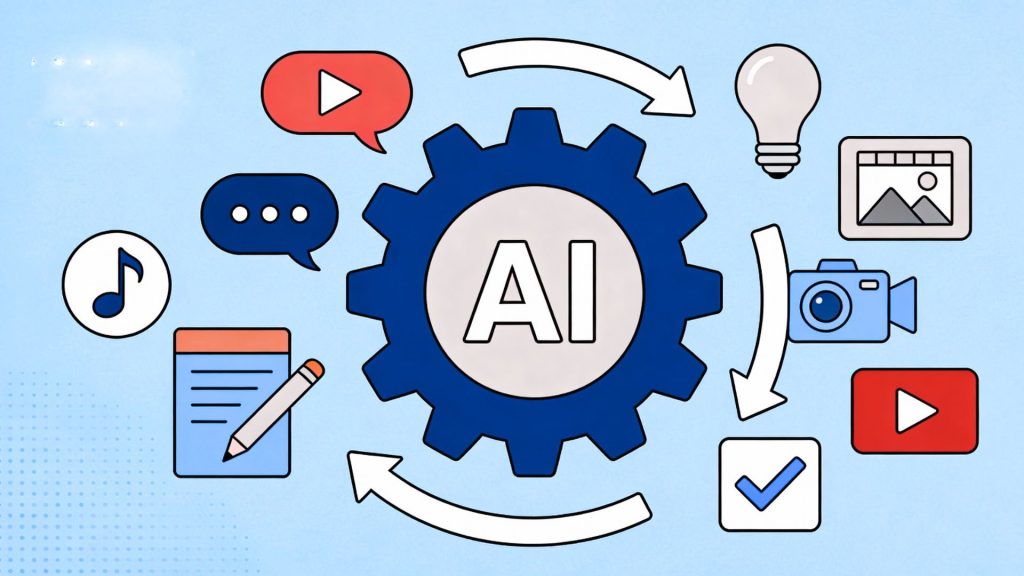
Content without visuals gets ignored. But design used to require specialized skills or expensive freelancers. Not anymore.
Tools like Canva added AI features that generate thumbnails, social graphics, and presentation slides in seconds. You type a prompt. The tool creates three variations. You pick one and make minor tweaks.
One entrepreneur creates all her LinkedIn carousels this way. She outlines the content. Feeds it into Canva. Gets a designed carousel in 30 seconds. She publishes 3-4 carousels per week with zero design background.
For video content, tools like Descript handle editing through text. You edit the transcript and the video updates automatically. No timeline scrubbing. No technical video knowledge required.
Another founder repurposes her podcast episodes using Descript. She pulls out 10 short clips from each long episode. Each clip becomes a social post. One 45-minute recording becomes 10 pieces of content.
This is the leverage AI provides. You create once and multiply output without multiplying effort.
The tools to consider: Canva for static visuals, Descript for video editing, Pictory for turning scripts into video. Again, pick one per category. Learn it completely. Add more only when you’ve maxed out what you have.
The Fatal Mistake in Choosing Your Blogging Tools
Look, after 15 years in SEO and blogging, I’ve watched hundreds of creators blow their budget and energy on the wrong tools. The biggest mistake? Copying the tech stack of successful creators without considering your own situation.
Someone managing a five-person team doesn’t have the same needs as a solopreneur. A $500 monthly budget opens different doors than bootstrapping on $50. Your tool selection needs to align with three crucial factors: your current skill level, your content volume, and your available budget.
The Three Selection Pillars
For beginners, free versions of ChatGPT and Canva cover 90% of your initial needs. You don’t need premium subscriptions until you’re publishing consistently and hitting usage limits.
I worked with a founder who spent $200 on premium tools her first month. The result? She used 10% of the features. After three months, she switched to basic plans, saving $150 monthly with zero impact on her output. Tools should eliminate friction, not create it.
If you’re spending more time learning a platform than using it, you picked wrong. If you’re paying for features you never touch, you’re burning cash. Start minimal, add tools only when you identify specific bottlenecks in your workflow.
Profile and Budget Comparison
Recommended Options by Objective
For technical SEO audits: Start with Google Search Console (free), then upgrade to Semrush when you’re generating over 50 articles. KeySearch offers 70% of Semrush’s functionality at $24/month if your budget’s tight.
For content creation: ChatGPT Free is sufficient until you hit query limits. Jasper ($189/month) only becomes relevant if you’re producing 20+ articles monthly with advanced AI optimization needs.
For visual design: Canva Free covers 90% of blog image needs. Only upgrade to Canva Pro if you’re creating reusable templates for a team or need the Brand Kit feature.
Avoid shiny object syndrome and subscription bloat
Every week a new AI tool launches. Every launch promises to revolutionize content creation. The temptation is real. You want the latest features. You don’t want to fall behind.
But tool hopping destroys productivity. You spend time learning new platforms instead of creating content. You split your workflow across multiple systems. Nothing integrates smoothly.
One entrepreneur told me she subscribed to seven AI tools in two months. She used two regularly. The other five sat unused while charging her card monthly. That’s $300 wasted on software that created zero value.
The antidote is discipline. When you see a new tool, ask three questions. What specific problem does this solve? Can my current stack already handle this? Will this integrate with my existing workflow?
If you can’t answer all three clearly, don’t subscribe. Bookmark it. Revisit in three months if the problem still exists.
Your goal isn’t to have every tool. Your goal is to have the right tools working together seamlessly. A small optimized stack beats a large fragmented one every time.
Build your stack with intention
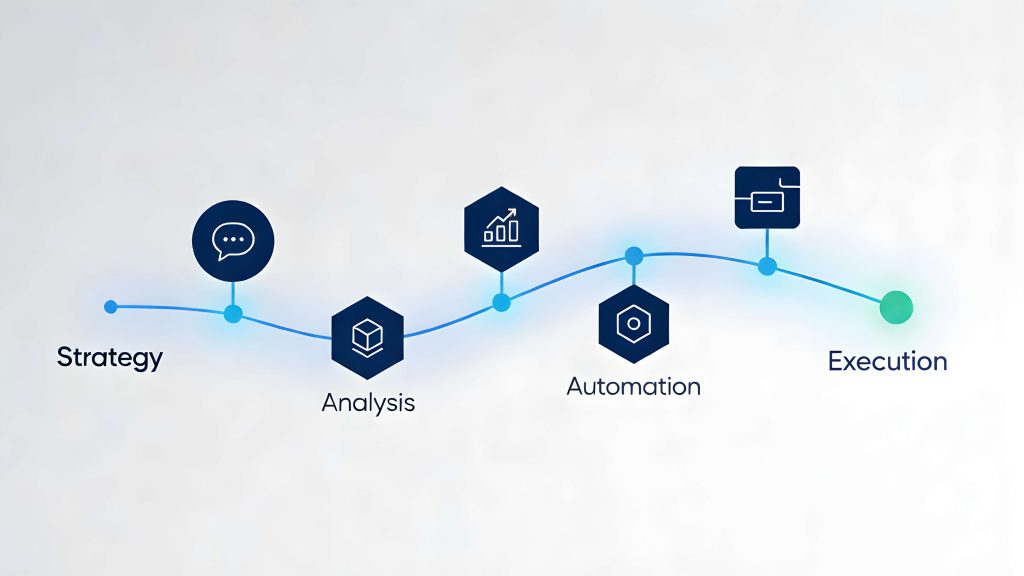
Tool selection is a strategic decision, not a shopping spree. The best stack for you depends on your content strategy, your skill level, and your business model.
Most solo founders need just four tools. One for research. One for writing. One for design. One for distribution. That’s the foundation. Everything else is optional.
Start there. Build consistency with your basic stack. When you hit real limitations, then expand thoughtfully. Not because a tool looks cool. Because you identified a bottleneck that needs solving.
This approach keeps you focused on what matters: publishing valuable content consistently. The tools serve the strategy. The strategy doesn’t serve the tools.
Once you have your stack in place, the next challenge is building workflows that turn these tools into a repeatable content system.