
The promise of passive income draws countless entrepreneurs to affiliate marketing. The reality often disappoints. What begins as a side project with flexible hours becomes a demanding second job. Content calendars, email sequences, social media posting, performance monitoring, link maintenance, product research. The tasks multiply faster than the hours available to complete them.
Automation offers escape from this trap. Not the fantasy version where money appears while you sleep without prior effort. The realistic version where systems handle repetitive tasks, freeing you to focus on strategy and creativity that actually move the needle. Building these systems requires upfront investment. Running them costs relatively little ongoing attention.
The entrepreneurs who achieve genuine lifestyle freedom through affiliate marketing almost universally share one characteristic. They build machines that operate without constant intervention. Understanding what to automate, how to automate it and what must remain human makes the difference between a business that serves your life and one that consumes it.
The automation mindset shift
Most people approach automation backwards. They learn about a tool and search for ways to use it. The resulting automations often address problems that did not need solving while genuine bottlenecks remain manual.
Effective automation starts with honest assessment of where your time actually goes. Track a typical week in detail. The results often surprise. Hours disappear into email. Social media posting consumes mornings. Manual reporting eats afternoons. Repetitive research tasks fragment focus throughout the day.
Identifying these time sinks reveals automation opportunities. But not every time-consuming task deserves automation. Some activities, despite their demands, benefit from human attention. The judgment calls, the relationship building, the creative work that differentiates your brand. Automating these often backfires.
The sweet spot sits at the intersection of repetitive, time-consuming and rules-based. Tasks you perform the same way every time. Tasks that consume meaningful hours each week. Tasks where clear logic can guide decisions without nuance or context.
Starting with this framework prevents the common mistake of automating for its own sake while leaving genuine efficiency opportunities unexploited.
Email automation that nurtures and converts
Email represents perhaps the highest-leverage automation opportunity for affiliate marketers. The channel converts well. The technology for automation is mature. The upfront effort to build sequences pays dividends for months or years.
Welcome sequences for new subscribers establish relationship foundations automatically. Rather than manually sending introductory emails to each new sign-up, automated sequences deliver consistent experience at scale. A well-crafted welcome series introduces your perspective, delivers immediate value, and naturally incorporates relevant affiliate recommendations.
Behavioral triggers extend automation beyond simple time-based sequences. Someone clicks a link about productivity software in your newsletter. That action triggers a sequence focused on productivity tools and recommendations. Someone abandons reading a review midway. A follow-up email addresses common objections and invites them back. These response patterns feel personal while operating entirely on autopilot.
Re-engagement campaigns automatically activate when subscriber activity drops. Rather than watching your list slowly go cold, automated sequences attempt revival at optimal intervals. Those who respond return to active segments. Those who remain unresponsive get cleaned from your list, maintaining deliverability.
Promotional campaigns around launches, sales events and seasonal opportunities can be templated and scheduled in advance. Black Friday emails written in October. Product launch sequences prepared before release dates. This front-loaded work eliminates the scramble that causes most marketers to miss revenue opportunities.
The key to email automation that performs lies in segmentation. Broad messages to undifferentiated lists convert poorly regardless of automation sophistication. Targeted messages to segments defined by interest, behavior and engagement stage feel relevant and drive action.
Content distribution on autopilot
Creating content represents only half the challenge. Getting that content in front of audiences demands ongoing distribution effort that quickly becomes overwhelming without systems.
Social media scheduling tools allow batch creation and automated posting across platforms. Rather than interrupting deep work multiple times daily to share content, a focused session once weekly queues posts for the days ahead. Platforms like Buffer, Hootsuite and Later have offered this functionality for years. Newer tools add intelligence that optimizes posting times based on audience engagement patterns.
RSS-to-social automation publishes new content automatically when it goes live. Your blog post hits publish. Minutes later, announcements appear across Twitter, LinkedIn and Facebook without manual intervention. This basic automation ensures consistent promotion without requiring you to remember each time.
Content repurposing workflows multiply the value of each piece created. A blog post becomes a Twitter thread, an email newsletter section, a LinkedIn article, a Pinterest graphic and a YouTube script. Automating portions of this transformation extends reach without proportional effort increase.
Email notification to subscribers when new content publishes keeps your audience engaged without manual outreach. Setting this as an automated trigger tied to your publishing schedule maintains connection with readers who prefer email to feed-based discovery.
Syndication to partner sites and content platforms can follow automated patterns. Guest post agreements, Medium cross-posting and industry site contributions often accept content on predictable schedules that automation can support.
Monitoring and maintenance without manual checking
Affiliate sites require ongoing attention to remain functional and optimized. Links break. Products discontinue. Prices change. Competitors publish. Rankings shift. Catching these changes quickly enables rapid response. Missing them allows problems to compound.
Link monitoring tools automatically check affiliate URLs for functionality. Broken links cost commissions and damage user experience. Automated alerts when links fail enable same-day fixes rather than discovering problems weeks later through declining revenue.
Rank tracking automates visibility into search performance. Daily position checks for target keywords reveal trends requiring attention. Sudden drops might indicate algorithm changes, new competitors, or technical problems worth investigating. Steady gains confirm strategy validity.
Competitor monitoring surfaces changes in your market landscape. New content from rivals, ranking gains they achieve, backlinks they acquire. Automated tracking of competitor activity informs your strategic response without requiring constant manual research.
Price and availability monitoring matters for affiliates promoting specific products. Automated alerts when products go on sale enable timely promotional content. Notifications when items go out of stock prevent frustrating readers with unavailable recommendations.
Revenue monitoring with threshold alerts catches problems and opportunities quickly. Sudden revenue drops might indicate tracking failures, program changes or traffic problems worth investigating. Unexpected spikes might suggest opportunities to double down on what works.
Building workflows that connect systems
Individual automations provide value. Connected workflows multiply it. The real power emerges when separate tools communicate, triggering cascading actions from single events.
Integration platforms serve as connective tissue between applications. Zapier remains the most accessible option for non-technical users, connecting thousands of applications through simple trigger-action configurations. Make offers more sophisticated logic for complex workflows. Native integrations between major platforms handle common connections without third-party involvement.
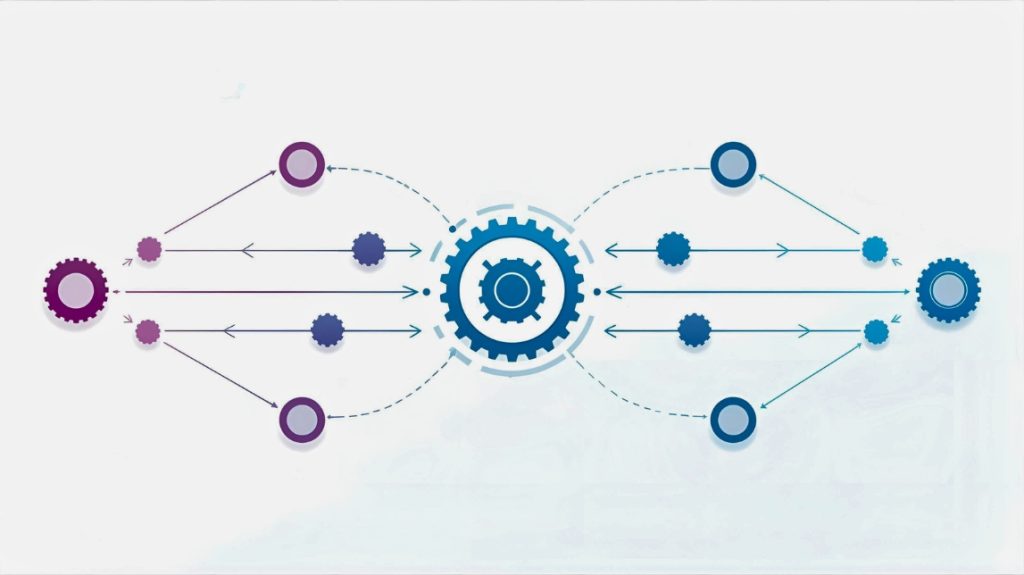
A simple example illustrates the concept. New blog post publishes. This triggers social media posts across three platforms. Simultaneously triggers an email to subscribers. Updates a spreadsheet tracking content output. Notifies team members via Slack. What previously required five manual actions happens automatically from one trigger.
More complex workflows incorporate conditional logic. New email subscriber joins. System checks which page they signed up from. Based on that source, assigns them to appropriate segment. Triggers welcome sequence matched to their interest. Tags them in CRM for future reference. Adds them to retargeting audience. Updates subscriber count dashboard.
The investment in building these workflows returns dividends indefinitely. Hours spent configuring integrations once eliminate minutes spent on manual tasks thousands of times over the business lifetime.
Reporting and analysis automation
Data collection and reporting consume surprising amounts of time when handled manually. Logging into multiple platforms, exporting data, combining spreadsheets, calculating metrics, formatting reports. These tasks add up, often crowding out the strategic thinking that data should inform.
Automated data aggregation pulls information from multiple sources into unified dashboards. Affiliate network earnings, traffic analytics, email performance, social metrics. Seeing everything together without manual compilation enables faster pattern recognition.
Scheduled report generation delivers key metrics to your inbox at regular intervals. Daily revenue summaries. Weekly traffic reports. Monthly performance reviews. These automated deliveries maintain awareness without requiring active retrieval.
Anomaly alerts surface issues and opportunities requiring attention. Rather than reviewing every metric daily, automated monitoring notifies you when numbers deviate significantly from normal patterns. This exception-based attention scales far better than comprehensive manual review.
Spreadsheet automation through scripts and formulas handles calculations and transformations automatically. Raw data flowing in gets processed, categorized and visualized without manual manipulation. Google Sheets and Excel both support sophisticated automation for those willing to learn their capabilities.
Maintaining quality through automation
The risk with extensive automation is quality degradation. Systems optimized for efficiency may sacrifice effectiveness. Finding the right balance requires intentional design and ongoing calibration.
Human review checkpoints prevent automation from operating entirely unsupervised. Automated social posts might queue for final approval rather than publishing directly. Email sequences might notify you before sending major promotions. These checkpoints add minimal friction while maintaining quality control.
Regular automation audits ensure systems still serve their intended purposes. Workflows designed months ago may no longer align with current strategy. Integrations may break without obvious notification. Scheduled reviews catch drift and dysfunction before they cause significant problems.
Performance benchmarking compares automated outputs to manually produced alternatives. If automated social posts consistently underperform hand-crafted versions, the efficiency gain may not justify the engagement loss. Data should validate automation decisions rather than assumptions.
Feedback loops capture signals that automation might miss. Reader responses to emails, comments on social posts, direct messages with questions or complaints. These human inputs inform automation improvements and catch problems that metrics alone might miss.
Starting small and scaling systematically
The temptation to automate everything at once leads to complicated, fragile systems that break at inconvenient moments. A measured approach builds more sustainable infrastructure.
Beginning with one high-impact automation makes sense for most affiliates. Often this means email welcome sequences, given their combination of proven effectiveness and straightforward implementation. Master this single automation before adding complexity.
Adding adjacent automations once fundamentals work well extends capability gradually. Welcome sequences lead naturally to behavioral triggers. Behavioral triggers lead to re-engagement campaigns. Each addition builds on proven foundations.
Documenting what you build creates reference material for maintenance and iteration. How each automation works, what triggers it, what it produces, how to modify it. This documentation proves invaluable when something breaks six months after creation.
Testing thoroughly before relying on automation catches problems early. Send test emails to yourself. Verify social posts appear correctly. Confirm data flows accurately between systems. The time spent testing pales compared to the cost of automation failures at scale.
The journey from manual operations to systematized business takes time. Each automation implemented frees capacity for the next. The compounding effect eventually transforms your relationship with the business entirely.
For entrepreneurs ready to combine automation with the strategic foundation that makes it worthwhile, exploring the complete guide to AI affiliate marketing provides the comprehensive framework for building a business that generates income without demanding every waking hour.