

Time has always been a leadership asset.
In today’s U.S. economy, it has become a competitive multiplier.
American enterprises operate in high-cost labor markets, accelerated innovation cycles, and performance-driven environments where misallocated time directly erodes margins. Executive teams face constant pressure to deliver results while managing increasingly complex hybrid and distributed workforces.
Multiple industry signals point to the same structural issue: time is no longer managed strategically. Meetings expand without proportional value, burnout rises across knowledge roles, and decision cycles slow despite advanced digital tools.
These challenges are not isolated productivity problems.
They are symptoms of systemic time misallocation.
AI time management addresses this gap by transforming time from a passive metric into an optimized strategic resource. For Upvalo, this is not about productivity hacks or task optimization. It is about building intelligent enterprise architecture that aligns time, performance, and growth.
What Is AI Time Management
AI time management is the use of artificial intelligence to optimize how time is allocated, protected, measured, and reinvestedacross an organization.
Unlike traditional productivity systems, AI time management functions as a continuous optimization layeracross leadership, workforce, and operations.
Core Technology Components
It integrates:
- AI scheduling software
- Predictive time analytics
- AI productivity tools
- Time tracking AI
- AI workflow automation
Together, these capabilities form a connected performance ecosystem. Instead of managing hours worked, organizations manage impact, outcomes, and strategic capacity.
The Five Core Pillars of AI Time Management
hese five articles form the operational backbone of AI time management in high-performance U.S. enterprises.
AI Scheduling Software Executive Calendar Optimization
Executive calendars define enterprise rhythm.
Traditional calendars document meetings. AI scheduling software optimizes strategic leverage.
Intelligent scheduling systems analyze productivity patterns, protect deep work windows, and dynamically reorganize priorities based on impact rather than availability. Automated meeting coordination reduces decision friction while preserving high-value cognitive capacity.
In high-performance U.S. organizations, even modest recovery of executive time compounds into measurable financial acceleration.
Predictive Time Analytics Preventing Burnout Before It Impacts Performance
Burnout is not a wellness concern alone; It is a material financial risk.
Predictive time analytics uses AI-driven models to detect overload patterns before performance deteriorates. Workforce analytics monitor workload concentration, after-hours activity, and task compression to enable proactive workload balancing.
Replacing experienced professionals is costly and destabilizing. Preventing disengagement protects organizational continuity, performance consistency, and institutional knowledge.
AI Productivity Tools — Powering Remote and Hybrid Execution
Remote and hybrid work are now permanent features of the U.S. workforce.
The challenge is no longer presence. It is coordination.
AI productivity tools enable intelligent prioritization, performance visibility, and execution alignment without surveillance-based control. These systems synchronize collaboration across distributed teams while preserving autonomy and flexibility.
The result is not looser structure, but smarter execution.
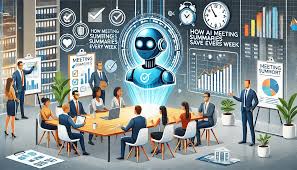
AI Workflow Automation Reclaiming Strategic Capacity
Many inefficiencies remain hidden inside repetitive coordination processes.
AI workflow automation integrates intelligent process automation across enterprise systems to eliminate manual handoffs, reporting friction, and approval bottlenecks. Automated workflows release cognitive bandwidth that can be reinvested into strategy, innovation, and leadership focus.
Strategic capacity scales when operational friction declines.
How AI Time Management Creates Competitive Advantage
AI time management delivers impact across five strategic dimensions :
Strategic Dimensions of Impact
| Dimension | Impact |
| Strategic Clarity | Leadership time aligns with revenue and growth priorities rather than availability gaps |
| Cognitive Protection | Deep work becomes structurally protected rather than sporadic |
| Workforce Stability | Predictive analytics prevent overload before it damages retention |
| Operational Efficiency | Automation accelerates execution while reducing coordination friction |
| Data-Driven Forecasting | Time intelligence connects productivity patterns to financial performance |
This is not incremental improvement.
It is systemic leverage.
Why U.S. Enterprises Are Accelerating Adoption
Structural Forces Driving Urgency
Several structural forces amplify the urgency of AI time management in the United States:
- High executive compensation increases the cost of wasted hours
- Competitive talent markets raise the cost of burnout and turnover
- Hybrid work increases coordination complexity
- Investor expectations demand measurable performance outcomes
AI time management aligns human capacity with financial output, transforming time into a measurable enterprise asset.
Implementation Framework for U.S. Organizations
AI time management should not be deployed as isolated tools.
AI time management should not be deployed as isolated tools, It requires phased, enterprise-level integration.
Phase 1: Leadership Optimization
Deploy AI scheduling software and time tracking AI at the executive level. Measure reclaimed strategic hours and compressed decision cycles.
Phase 2: Workforce Stability
Integrate predictive time analytics into HR and leadership dashboards. Train managers to respond to early overload indicators.
Phase 3: Distributed Execution
Deploy AI productivity tools across remote and hybrid teams. Align prioritization with revenue-driving objectives.
Phase 4: Process Automation
Introduce AI workflow automation in high-friction functions such as sales operations, reporting, and onboarding.
Phase 5: Ecosystem Integration
Connect all systems into a unified AI time management architecture aligned with enterprise KPIs.
Financial Impact of AI Time Management
The Compounding Effect of Time Recovery
Consider a mid-sized U.S. enterprise with senior leadership teams and a knowledge-based workforce aligned with national salary benchmarks.
When AI time management recovers executive hours, reduces burnout-related turnover, and automates repetitive coordination, the compounded annual financial impact can reach multi-million-dollar levels depending on scale and adoption depth.
Time optimization scales non-linearly. Small gains at the top cascade across the organization.
From Time Management to Time Intelligence
The Architecture Shift
Traditional time management emphasizes discipline.
AI time management focuses on architecture.
Instead of asking employees to work harder, organizations design smarter systems. Time becomes predictive, performance becomes measurable, and strategy becomes structurally protected.
Execution shifts from reactive coordination to intelligent orchestration.
Why Upvalo Leads in AI Time Management Strategy
A Competitive Infrastructure Layer
Upvalo does not position AI time management as a toolset.
We position it as a competitive infrastructure layer.
Our approach integrates:
- AI scheduling software for executive optimization
- Predictive time analytics for workforce sustainability
- AI productivity tools for hybrid execution
- Time tracking AI for performance intelligence
- AI workflow automation for strategic capacity expansion
Each component reinforces the others, forming a scalable, enterprise-grade performance ecosystem.