
Most agency owners think automation is one thing. It isn’t. It’s a progression-each level building on the last, each one solving a different problem.
You don’t jump from spreadsheets and email chaos into AI agents overnight. You climb. And the climb matters more than where you end up. Understanding this progression changes how you approach automation entirely. Most founders skip levels because they want the advanced stuff. That’s where they fail. Before you touch any tool, you need to see the full 4-level automation system clearly. Not as a destination. As a roadmap.
Level 1: Task automation – where every agency starts
Here’s what most people overlook: you don’t need AI to start automating.
Task automation is about removing repetition from single tasks. One action, repeated weekly, consuming time that doesn’t move your business forward. Your spreadsheet exports. Your email sorting. Your calendar blocks. Your data entry between tools. These are the tasks that feel inevitable-but they’re not. They’re just tasks.
A design agency I worked with was exporting client feedback from their project tool eve
ry single week and pasting it into a tracking spreadsheet. Same thirty minutes, every Friday. No variation. No thinking required. Just repetition. They set up a simple automation: when a feedback status changed, the data flowed automatically to the sheet. Done. Thirty minutes recovered every week.
But something else happened. Because the data was always current, they started noticing patterns they’d missed before. Which clients gave feedback fastest. Which projects got feedback slowest. Which feedback themes repeated. They made decisions based on data they didn’t even know they had.
That’s Level 1. Find the tasks that repeat. Automate them. Measure what changes. Then move forward.
Most agencies stop here. They shouldn’t. But they should start here.
Level 2: Workflow automation – connecting the dots
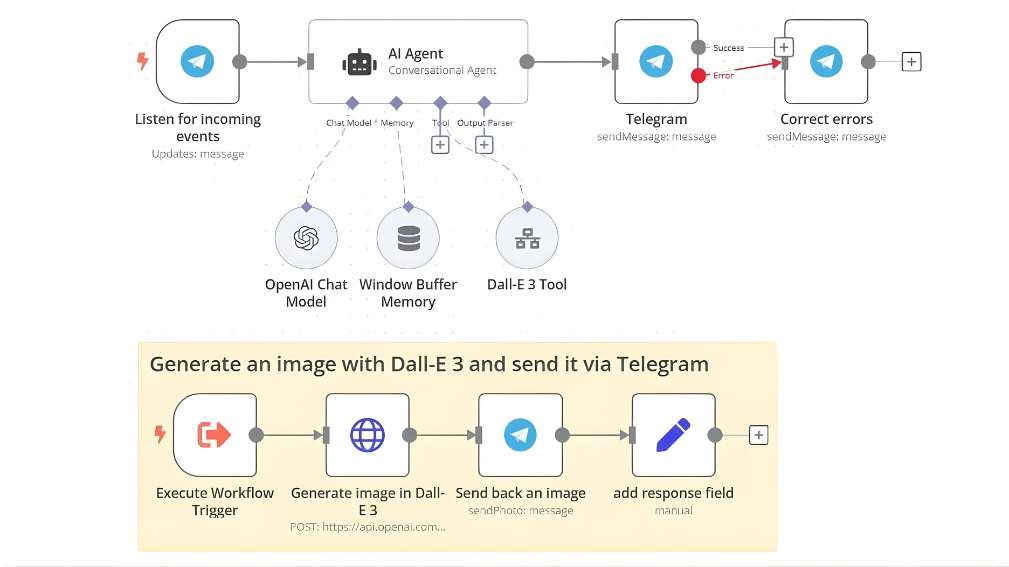
Now you’re doing something different. You’re not automating one task. You’re automating sequences.
A workflow is what happens when one automated action triggers another, which triggers another. Client sends brief → workflow creates project → workflow assigns designer → workflow sends kickoff email → workflow sets deadline in calendar. One human action. Multiple system outcomes. No human coordination in the middle.
This requires clarity you probably don’t have yet. You can’t build a workflow from a process that’s already broken. You need to know which steps matter. Which can wait. Which depend on others. Most agencies have never actually mapped their processes. They just do them, every time, slightly differently.
A content agency founder was managing client briefs like this: client sends brief → she reads it → she creates a project → she manually assigns the designer → designer creates mockups → designer sends them back → she gathers feedback from the client → she sends feedback back to the designer → the designer revises. Eight steps. Lots of handoffs. Lots of waiting. Lots of her time in the middle, coordinating.
We mapped it. Then we built a workflow. Now: client sends brief → workflow creates project → workflow assigns designer automatically → workflow sends the designer the project with context → workflow reminds the designer when mockups are due → workflow gathers feedback automatically → workflow routes feedback back to designer. Still eight steps. But zero coordination needed from her.
That workflow gave her five hours back every week. More importantly, it removed her from the process. The designer works. The client sees progress. The system manages the sequence. She manages outcomes.
Workflows compound. Over six months, one solid workflow can reclaim twenty hours a week. That’s half a day. Every single week.
Level 3: Intelligent execution – systems that understand context
This is where automation becomes smart.
You’re not just triggering sequences anymore. You’re teaching systems to understand what’s happening and respond appropriately. An agent that can read an email and decide: Does this need immediate attention? Can this be answered by an FAQ? Does this need escalation? An agent that can review a client brief and spot what’s missing before work starts. An agent that can summarize feedback and identify patterns humans would miss.
Level 3 isn’t about speed. It’s about intelligence. About removing the low-value thinking so humans can focus on actual decisions.
A consultant was drowning in fifty client emails daily. Most were routine questions she’d answered before. Some were urgent. Some could wait a week. She was spending two hours every morning just reading and sorting. So we built an AI agent that reads incoming emails, categorizes them by actual urgency (not just tone), extracts the key information, and routes accordingly. Routine questions get answered by her FAQ system automatically. Urgent issues go to her directly with context already prepared. Everything else gets summarized for her weekly review.
She still gets fifty emails. Now it takes her thirty minutes. The system doesn’t replace her judgment. It removes the low-value work so judgment is possible.
This is where you need practical AI agents for agencies to understand which specific agents actually work without breaking your process. Level 3 is powerful, but only if you know which agents deliver real ROI for your situation.
Level 4: Autonomous agents — full independence within clear boundaries
This is where automation reaches its maturity.
An autonomous agent doesn’t just execute sequences. It reasons. It decides. It handles edge cases. It escalates only what matters. An agent managing your client onboarding conversation can answer sixty, seventy, sometimes eighty percent of questions without any human input. It knows when to escalate. It knows when something needs your attention. It’s not replacing your team. It’s amplifying them.
But here’s what matters: Level 4 is not where you start. It’s where you arrive. And you only arrive if you’ve built Levels 1, 2, and 3 first.
An agency owner tried jumping straight to Level 4. She wanted a fully autonomous agent managing all client communication. She hadn’t mapped her client communication. The agent made decisions based on guesses. It escalated wrong things. It missed nuance. She turned it off after two weeks, frustrated and convinced automation didn’t work.
Then she went backward. She spent a month building Levels 1 and 2. She mapped her actual process. She understood which decisions mattered. She tested workflows manually first. Then Level 4 made sense. The agent worked because it had clear rules. It understood context. It knew what mattered.
Level 4 takes months to build correctly. But when it works, it’s like hiring someone who never gets tired, never forgets, never makes the same mistake twice.
Why the progression matters
The levels exist because each one builds skills and reveals problems.
Most agencies fail at automation because they skip levels. They want Level 4 outcomes with Level 1 clarity. That’s impossible. The ladder works because each rung teaches you something about your own process. Task automation teaches you what actually repeats. Workflow automation teaches you which decisions matter. Intelligent execution teaches you where your system is fragile. Autonomous agents work only because you’ve already fixed everything below them.
The path is simple: start with Level 1. Pick one task. Automate it. Measure it. Then Level 2. Build one workflow. Test it. Then Level 3. Add one intelligent layer. Watch what happens. Then—only then—Level 4.
This progression takes three to six months for most agencies. At the end, you have a system that runs itself. You’re managing outcomes, not coordinating tasks. Your team does real work, not busy work. That’s not just efficiency. That’s freedom.
When you understand that automation is a ladder, not a leap, everything changes. You’re not hoping for magic. You’re building discipline. You’re not chasing tools. You’re engineering outcomes.