
Ai can simplify seo tasks, but using it incorrectly is a fast track to originality issues and ranking drops. Understanding google’s 2026 guidelines is essential to stay compliant. Building on principles shared in our ai content creation guide, this article explains how to leverage ai while keeping your content trustworthy, accurate, and optimized for search engines.
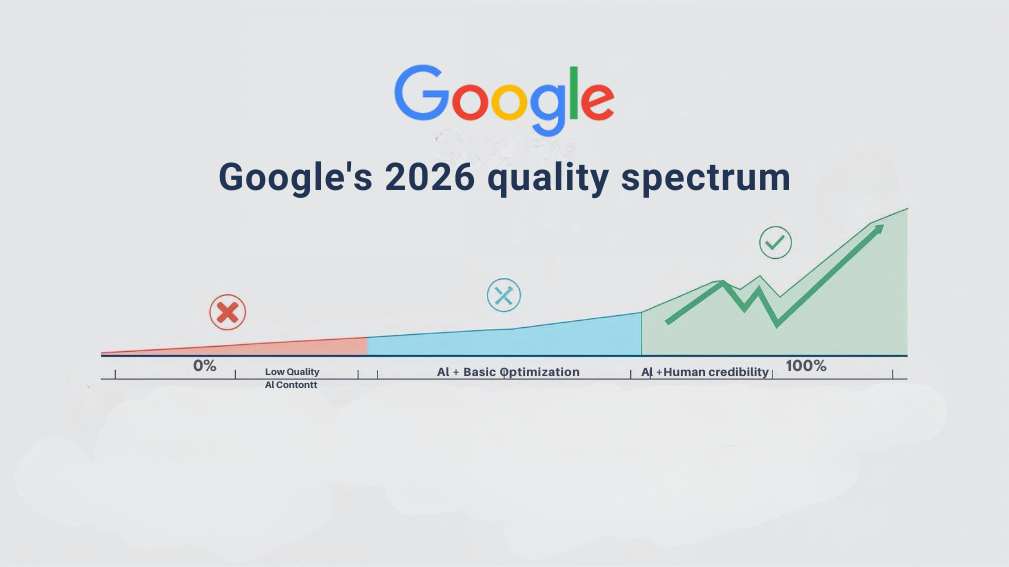
The credibility first approach to ai seo
The biggest mistake creators make is treating ai as a shortcut to mass-produce content. Google is not penalizing ai content; it is penalizing low quality, unhelpful content. The focus has shifted entirely to e-e-a-t (experience, expertise, authoritativeness, trustworthiness). Your goal is not to write more but to write better and more credibly.
1. Experience and expertise (E-E)
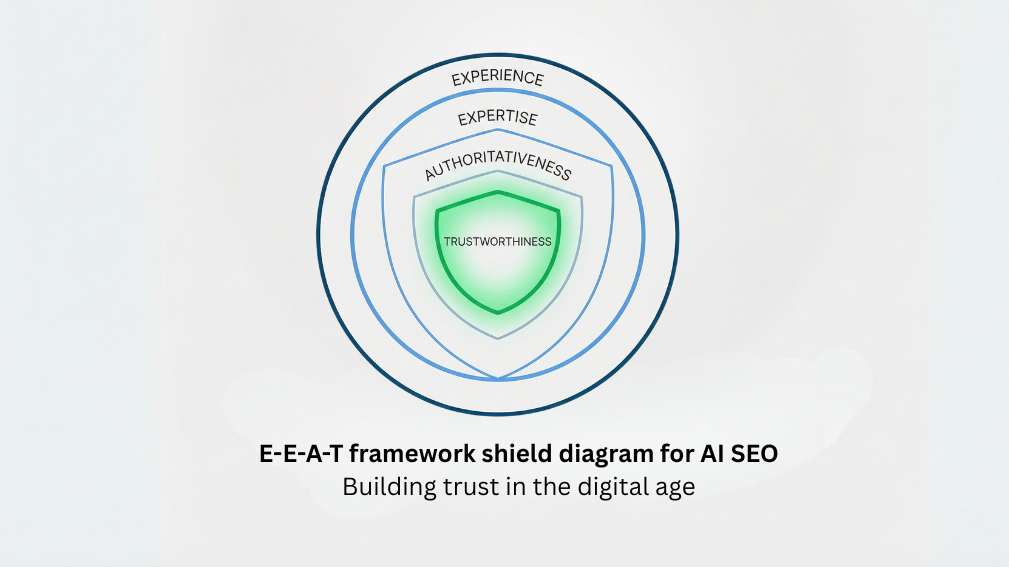
This is the human element ai cannot replicate. Google wants to see evidence that a real person with real experience wrote the content.
| Ai seo mistake | Credibility first fix |
| Generic content: Ai-generated text that lacks personal stories or unique angles. | Inject personal insight: Add anecdotes, case studies, and “I’ve seen this happen” Moments. Your unique experience is your best seo tool. |
| Surface level answers: Content that only scratches the surface of a topic. | Go deeper: Use ai for research synthesis, but then add a layer of depth that only your expertise can provide. Aim for 10x content. |
I’ve found that articles where i dedicate at least 20% of the word count to personal experience and unique examples consistently rank higher and retain readers longer than purely optimized pieces. Google rewards the human touch.
2. Authoritativeness and trustworthiness (A–T)
This is where you use ai to ensure technical excellence without sacrificing accuracy.
| Ai seo mistake | Credibility first fix |
| Hallucinations/inaccuracies: Ai making up facts, dates, or sources. | Fact check everything: Use ai for drafting, but use a separate tool (like perplexity ai or a manual search) to verify every key statistic, name, and date. Never publish an unverified fact. |
| Poor internal linking: Content that is isolated and doesn’t connect to the rest of your site. | Use ai for structure: Use tools like link whisper to identify relevant internal linking opportunities. A strong internal link structure boosts authority across your site. |
| Over optimization: Keyword stuffing or unnatural language. | Focus on clarity: Use seo tools like surfer seo to check for keyword gaps, not just density. Your primary goal is to be clear and helpful to the reader. |
How to use ai for seo tasks safely
AI should be used to support the mechanics of seo, not the core message.
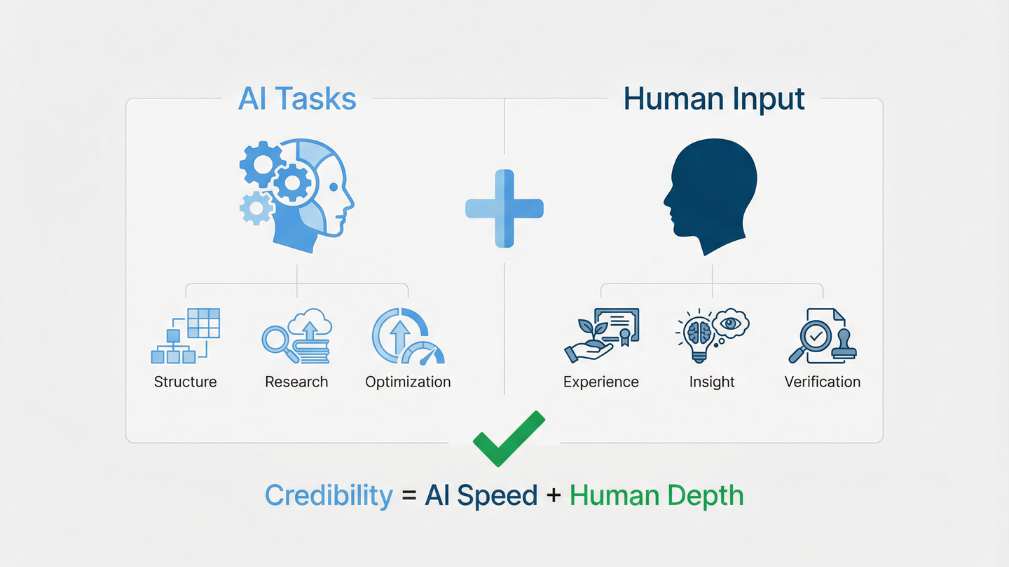
1.keyword research: Use tools like ahrefs or semrush to find high intent keywords. Use ai (e.g., chatgpt 4) to cluster those keywords into logical article topics.
2.outline generation: Use ai to generate a comprehensive outline that covers all subtopics. This ensures you meet the search intent better than your competitors.
3.meta data optimization: Use ai to quickly generate multiple versions of titles and meta descriptions, then select the one that best reflects your unique angle and personal expertise.
4.content refinement: Use ai to check for readability and tone, ensuring the final text is clear and engaging.
The future of seo is not about hiding the fact that you use ai. It’s about proving that your content is superior despite using ai. Use the tools to remove the friction of the process, but always be the one to inject the unique experience, the strong opinion, and the verifiable facts. When you lead with credibility, the rankings will follow.