
Choosing the right tools is key to building a high performing content system. From writing assistants to editing platforms and full automation suites, each category serves a specific purpose. Following the foundations established in our ai content creation guide, this article reviews the essential tools that help creators scale with confidence in 2026.
The core ai content creation stack: Picks
The market is saturated with ai tools, but only a few are truly essential for a high performance, credibility first workflow. I’ve broken down the tools i personally rely on and recommend to my clients.
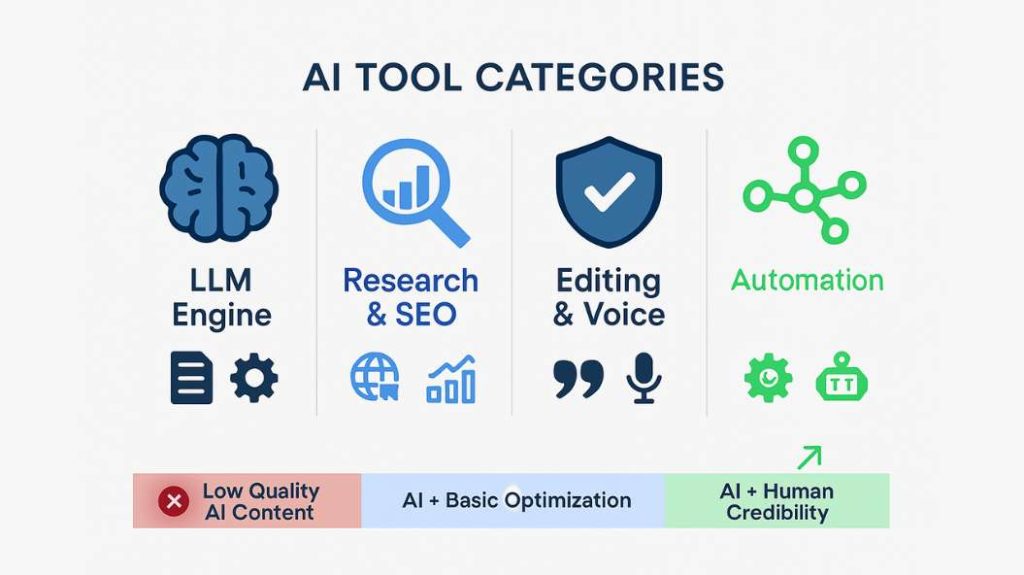
1. Large language models (llms): The engine
These are the foundation of your drafting and idea generation. They act as your first draft assistant.
| Tool | Primary use case | Why it’s essential |
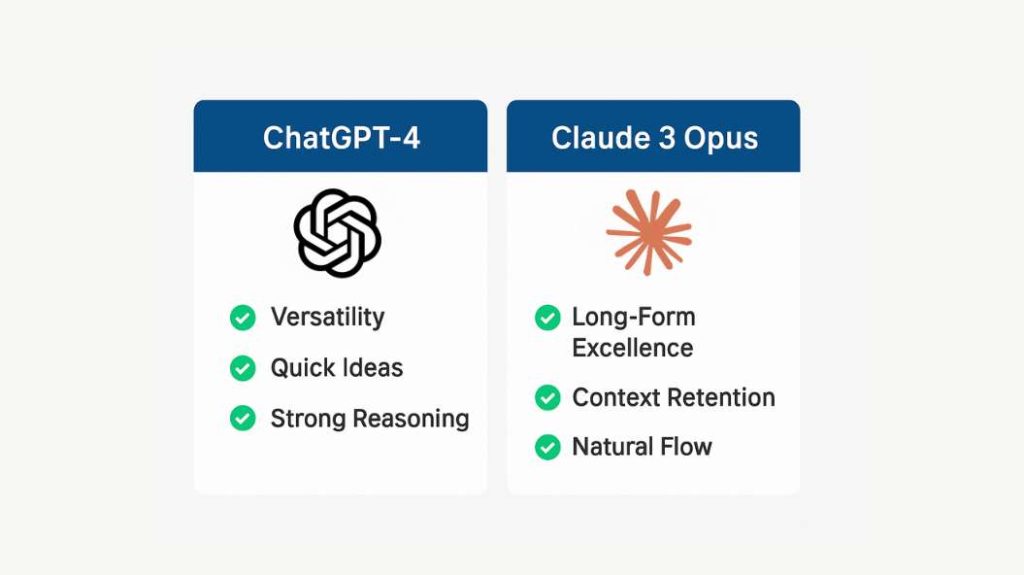
| Chatgpt 4 (or gpt 4o) | Idea generation, outline structuring, first draft acceleration. | Best for versatility: Its massive knowledge base and strong reasoning make it the best all around tool for starting any content piece. |
| Claude 3 opus | Long form drafting, tone refinement, complex summarization. | Best for long form & nuance: Excels at maintaining context over long documents and generating text with a more natural, human like flow. |
2. Research & seo tools: The authority builders
These tools ensure your content is both discoverable and authoritative. They replace hours of manual research.
| Tool | Primary use case | Why it’s essential |
| Ahrefs / semrush | Keyword research, competitor analysis, topic clustering. | The foundation: Essential for ensuring you write about topics that matter and that you cover the search intent comprehensively. |
| Perplexity ai | Fact checking, source verification, quick synthesis of current data. | The credibility check: Provides verifiable sources for ai generated claims, which is critical for E-E-A-T. |
| Surfer seo | Content optimization, structure analysis, on page seo. | The ranking booster: Helps you bridge the gap between your human written draft and what search engines expect to see for a high ranking page. |
3. Editing & refinement tools: The voice protectors
These tools ensure your unique voice shines through the ai assisted draft. They are the final human in the loop check.
| Tool | Primary use case | Why it’s essential |
| Grammarly premium | Grammar, clarity, and style consistency checks. | The safety net: Catches the small, mechanical errors that can undermine your professionalism. |
| Improving rhythm | Hemingway editor | Small adjustments to length and structure make your writing easier to read. Rhythm matters more than most people realize. |
| Removing unwanted repetition | Languagetool | Repetition is common during drafting. A good editor highlights it so your final text stays clean. |
4. Automation & repurposing tools: The scalers
These tools help you get more mileage out of every piece of content you create.
| Tool | Primary use case | Why it’s essential |
| Zapier / make (formerly integromat) | Connecting tools, automating data flow (e.g., from research notes to cms). | The workflow glue: Essential for true scaling. Automates the tedious, repetitive tasks between your different tools. |
| Opus clip / descript | Turning long form video/audio into short, viral clips. | The reach extender: Maximizes the return on investment for your long form content by automatically generating social media assets. |
Building your own stack: A creator’s mindset
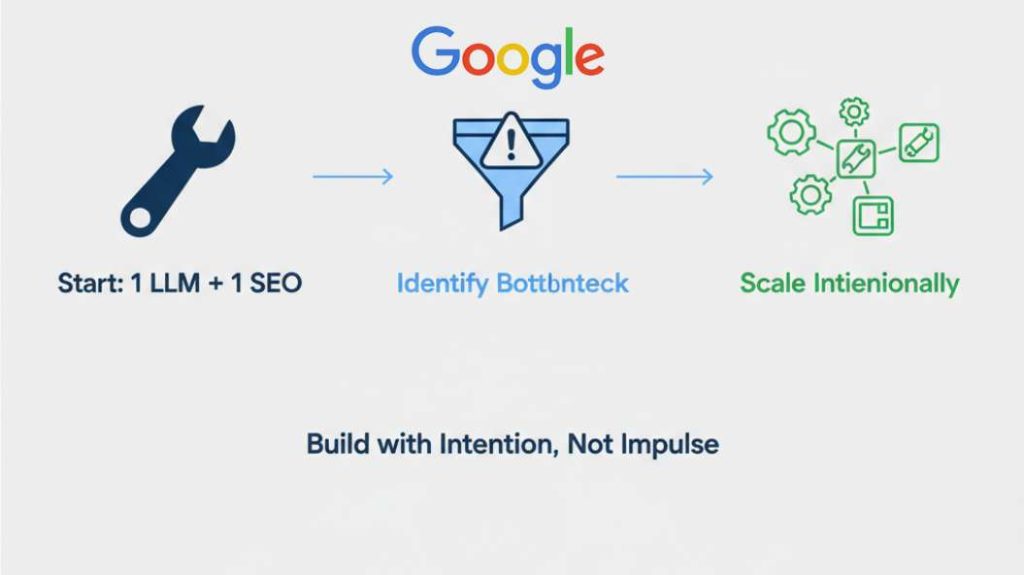
Don’t try to use all these tools at once. Start with one llm (chatgpt 4 or claude 3) and one seo tool (ahrefs or semrush).
My advice: The best stack is the one you actually use. I recommend a minimalist approach where you only add a new tool when you identify a clear bottleneck in your current 5 step workflow. For example, if you spend too much time fact checking, add perplexity ai. If you struggle with readability, add hemingway editor. Build your stack with intention, not impulse.