
By el habib el mouahid ai content creation specialist & digital marketing writer

AI content creation 2026 is no longer optional it is the new standard for creators and marketers who want to publish consistently without burning out.
I have spent years watching creators struggle with the same problems: the blank page, endless research, and the pressure to produce more content while maintaining quality. The issue was never effort. It was the lack of a clear system.
With AI content creation 2026, the process changes completely. By adopting a structured, AI-assisted workflow, I personally reduced my research time by 40% not by cutting corners, but by removing unnecessary friction. The real result was not just speed, but consistency.
And in 2026, consistency is what separates creators who grow from those who burn out.
In this guide, you will learn how AI content creation 2026 works in practice: what it really means, the real benefits worth knowing, the risks you need to manage, the right tools for your stack, and the 5-step workflow to produce high-quality content faster.
This is not about letting a machine write for you. It is about protecting your voice while gaining the clarity and speed that make publishing sustainable.
Table of contents
1. Why AI content creation 2026 matters more than ever
The landscape has changed faster than most creators expected. What used to be an optional productivity experiment has become a professional baseline. Creators who do not use structured ai workflows are now competing at a structural disadvantage not because ai writes better, but because it removes the friction that slows human creativity down.
The shift from manual writing to ai-assisted workflows
Not long ago, most creators relied on fully manual workflows. They researched by hand, drafted from scratch, and edited without structure. This made publishing slow, inconsistent, and exhausting. Creators who adopted ai-assisted processes did not simply speed up they changed the nature of their work.
The repetitive parts of the process became lighter. Research became faster. Outlining became more natural. Drafting felt like momentum instead of resistance. This freed creative energy for the parts that actually differentiate a creator: Their perspective, their voice, their unique angle on a subject.
El habib’s take: I have seen talented creators give up because they spent 80% of their time fighting with structure. A solid ai workflow gives that 80% back and you can reinvest it into the substance and personal stories that make the difference.
What changed in 2026 models, competition, and originality
Three forces have reshaped the environment in 2026.
Better models and smoother tools
The tools creators rely on have become faster, more intuitive, and easier to integrate into daily habits. You can outline a piece, refine a draft, or organise research without slowing your creative flow.
Increased competition
More people are publishing content now. Brands, freelancers, and solo creators are all trying to reach similar audiences. To stand out, you need both quality and regularity. A fluid workflow makes that possible.
More focus on originality
Readers and search engines expect ideas rooted in real experience. A good workflow protects your voice while keeping your content clear and structured. In 2026, originality is the competitive moat that ai cannot replicate for you.
2. What Is AI content creation 2026?
Many creators misunderstand the concept. They imagine a rigid system that removes personality from writing. In reality, ai content creation is a modern workflow that helps you move from idea to finished piece with less friction. It gives you structure, speed, and clarity while keeping your voice intact.
A Simple definition
Ai content creation is the practice of using smart tools to support each stage of your writing process. The key word is support. You remain the author. The ideas, the stories, the tone, and the direction come from you. The tools handle the heavy lifting the repetition, the mechanical steps, the parts that drain energy without adding value.
Types of AI systems creators use
Language models
They help you organise ideas, shape structures, and produce early drafts. Best used to accelerate the parts of the process that take the longest.
Agents
They assist with repetitive tasks: Sorting information, summarising notes, generating variations. Useful when you want to explore several angles without rewriting everything manually.
Assistants
These tools support editing, structure, and clarity. They help refine your text, improve flow, and make the writing easier to read.
What AI can and cannot do
What these systems can do:
- Generate and organise ideas
- Structure outlines and hierarchies
- Speed up first drafts
- Refine clarity, flow, and rhythm
- Prepare content for seo
- Repurpose ideas across formats and platforms
What they cannot do:
- Understand your specific audience for you
- Replace your lived experience and personal voice
- Produce depth without your guidance and direction
- Protect your originality without intentional effort
- Make editorial judgment calls
Key principle: Creators who accept these limits produce stronger work because they use tools with intention. They know when to let the system help and when to step in and shape the direction.

3. Key benefits of AI content creation 2026
The advantages of ai-assisted workflows go well beyond speed. If you want a complete breakdown of every benefit, the dedicated guide on key benefits of ai content creation in 2026 covers each one in depth. Here are the three that matter most.
Faster content production
Speed is often misunderstood. It does not mean rushing. It means removing the heavy parts that slow you down. Most creators lose time in two stages: Research and drafting. When you use structured tools, you reduce the mental load and the writing itself becomes faster without sacrificing quality.
A blank page makes everyone hesitate. With a solid outline already in place, the writing stage becomes far easier. You know the direction. Your mind stays calm and focused. The ideas flow naturally instead of forcing their way out.
Personal stat: By adopting this workflow, i reduced my research time by 40%. That time went directly back into the substance and personal stories that make each piece worth reading.
Consistency and growth
Many creators start strong but lose rhythm. Consistency demands energy. Some days you simply cannot deliver the same amount of work. A structured workflow protects against this because the process becomes predictable even on low-energy days, you can make progress.
When your process stays consistent, your tone becomes recognisable. Readers start to trust your voice. They sense stability. They return because your content feels organised and thoughtful. Over time, this builds an audience that expects and anticipates your work.
Boosting creativity
People often assume that structured workflows reduce creativity. The opposite happens. When your mind is not overloaded with logistics, it becomes free to think and explore. You have more room for angles, stories, and insights. You can experiment with new formats. You write from a place of calm focus instead of exhaustion.
Better storytelling emerges naturally when you are not fighting the structure. You shape the message instead of wrestling with mechanics.
4. Risks of AI content creation 2026 you must avoid
Understanding where ai-assisted workflows fall short is as important as knowing their strengths. For a full breakdown of every risk and how to manage it, see the dedicated guide: Ai content risks in 2026 and how to avoid them.
Accuracy and Hallucinations
No tool understands information the way a human does. It predicts patterns based on past data which means it can produce details that sound accurate but are not. Dates may shift. Names can be mixed. Sources might appear credible but not exist.
Real example: A tool once generated an article citing a stanford university study on seo impact. The study existed but it was from 2012 and had nothing to do with seo. If i had published without checking, my credibility would have been damaged immediately. Verification is not optional.
The fix is simple: Always check key facts independently. A quick search or a trusted source resolves most issues before they become problems.
Over-Automation Trap
Trying to automate every step weakens the quality of your ideas. When you let the system lead the direction, content starts to feel flat. Ideas look similar from piece to piece. The personal spark fades because the creator is no longer driving.
Automate the repetitive tasks. Keep the creative ones human. Your ideas, your tone, and your editorial judgment should always lead the process.
Protecting Your Brand Voice
When you use the same patterns repeatedly, your style becomes less distinct. It may sound clean but not memorable. Readers stop recognising your voice over time.
The fix: Keep a style file with your tone markers, favourite expressions, and examples of your natural writing. Use it as a reference every time you edit. A few targeted adjustments are enough to restore personality and protect what makes your work recognisable.
5. The best AI content creation stack for 2026
A modern content stack is not about collecting the most tools. It is about choosing the right ones and knowing how they fit together. The full breakdown of every category is available in the dedicated guide: The essential ai content creation stack for 2026. Here is the overview.
Writing Tools
Chatgpt-4 and claude are the two dominant models for moving from outline to draft. Once you have a clear structure, these tools help you shape ideas into full paragraphs while you maintain the tone and direction. Jasper and copy.ai are useful for breaking through hesitation and testing different angles quickly.
Research Tools
Ahrefs and semrush help narrow a broad idea into a topic people are actually searching for. Surfer seo and frase give you competitor insight what readers expect and where your angle can stand apart. Perplexity ai is excellent for rapid fact verification without derailing your flow.
Editing Tools
Grammarly premium and prowritingaid detect heavy sentences that look fine at first but feel difficult when read aloud. Hemingway editor improves rhythm. Languagetool catches repetition that accumulates during drafting.
SEO and Repurposing Tools
Yoast seo and rank math handle structure and readability checks directly in wordpress. Surfer seo guides natural keyword placement. Link whisper surfaces internal linking opportunities. For repurposing, opus clip and descript transform long-form content into short-form assets. For a complete tool-by-tool comparison, see the dedicated article on the best ai tools in 2026.
6. The 5-step AI content creation 2026 workflow
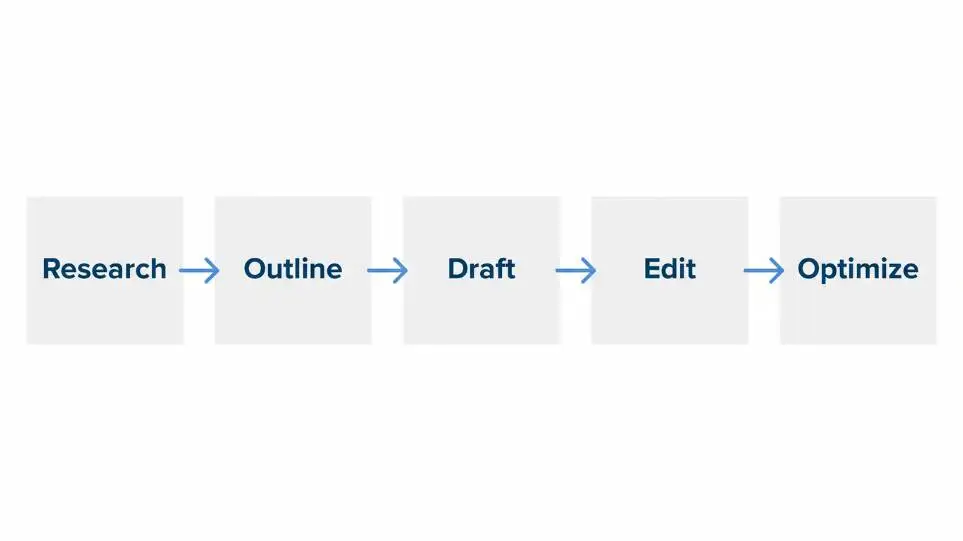
This is the workflow that makes everything else repeatable. The complete step-by-step breakdown with practical examples for each stage is available in the dedicated guide: The 5-step ai writing workflow every creator needs. Here is the structure.
Step 1: Research
Start with a clear topic and collect only what matters. A few strong insights are worth more than a long list of random notes. Think about the specific problems your reader faces. This shapes your angle before you write a single sentence.
Key stat: Using ai research tools to synthesise competing articles, my clients have reduced time spent on research by an average of 35% which means more time for the substance that makes a piece stand out.
Step 2: Outline
A simple structure with a few main points and short bullets under each. You are not trying to write yet only to organise. A clear outline stops you from wandering inside the draft and eliminates the need to rewrite entire sections later.
Step 3: Draft
Write without stopping. Do not edit while drafting. Keep moving. The goal is momentum, not perfection. A draft is allowed to be messy. You will clean it in the next step. Following your outline means the structure carries you you are not building and building simultaneously.
Step 4: Edit
This is where your voice becomes clear. Read the piece aloud. Fix what sounds heavy. Ask whether each sentence says exactly what you want it to say. Add personal examples if the text feels thin. Remove what does not serve the message.
Step 5: SEO optimization
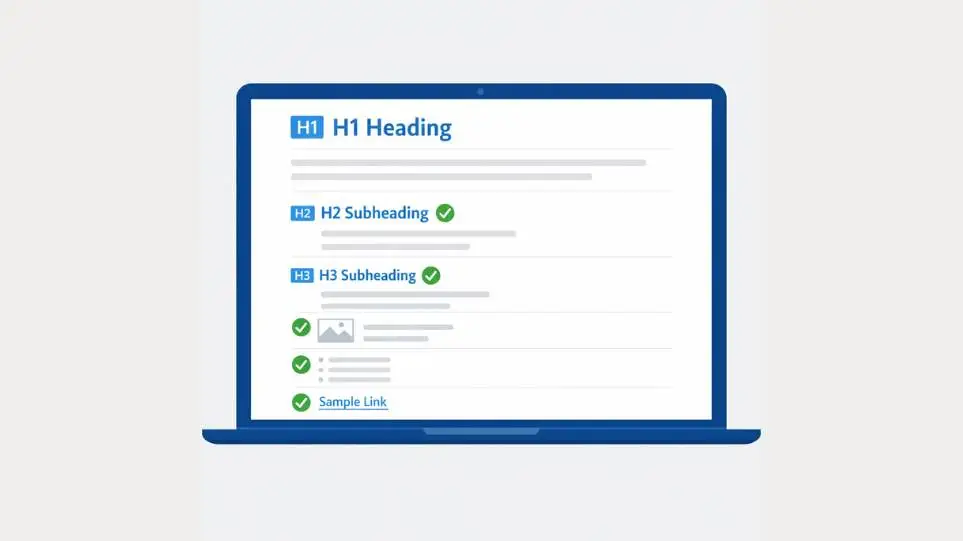
Add helpful headings, place keywords naturally, and strengthen internal links. This step should never change your message only the structure around it. For a complete guide to seo optimisation with ai without risking penalties, see: Using ai for seo in 2026 without penalties.
7. How to use AI content creation 2026 safely for SEO
Search engines have evolved significantly. Shallow content is easier to detect than ever. If you want the full tactical guide, the dedicated article on using ai for seo in 2026 without penalties covers everything in depth.
Google expectations in 2026
Google’s 2026 guidelines reward content that demonstrates genuine expertise, first-hand experience, and clear value for the reader. Ai-generated text is not penalised by default but content that lacks depth, originality, or human perspective consistently underperforms in rankings.
E-e-a-t strategy
E-e-a-t stands for experience, expertise, authoritativeness, and trustworthiness. The strongest signal you can send is personal experience embedded in your content. Real anecdotes, verified data, transparent methodology, and a clear author profile all contribute. These are things ai cannot fabricate they have to come from you.
Fact-checking and originality
Every piece of ai-assisted content should go through a verification pass before publication. Check names, dates, statistics, and any cited sources. Add your own examples and perspective to every section. The parts that feel most human are often the parts that rank best and the parts readers remember.
How creators win with ai content creation 2026
The creators who will grow in 2026 are not the ones with the most tools. They are the ones with the clearest systems. Ai content creation works when you use it with intention as a support structure for your ideas, not as a replacement for them.
Hybrid workflow
The most effective approach combines ai speed with human judgment. Let the tools handle research synthesis, first drafts, and structural refinement. Keep the editorial decisions, the personal voice, and the original perspective entirely yours. This hybrid is what produces content that ranks and resonates simultaneously.
Consistency vs perfection
A sustainable publishing rhythm built on a repeatable workflow will outperform sporadic bursts of perfect content every time. The compound effect of consistent, high-quality publishing is the real competitive advantage and it is only achievable with a system that does not drain you.
Build your content system
Start with the 5-step workflow. Layer in the right tools for your stack. Understand the risks and protect your voice. Apply seo best practices without compromising quality. And if you are just starting out, the beginner-friendly guide understanding ai content creation gives you the foundations in plain language.
The system is here. The tools are ready. The only thing left is the decision to build it.
El habib el mouahid is an ai content creation specialist and digital marketing writer. He helps creators and marketers use ai tools to write faster, improve their workflow, and scale their content without losing authenticity.