

Most entrepreneurs blame lack of time for inconsistent content. But the real problem runs deeper. Without structured workflows, even the best ideas stay trapped in notes apps. Manual processes drain energy, slow growth, and create burnout. This reality affects visibility, revenue, and competitive edge. Understanding these bottlenecks is the first step toward building a content engine that works. For a complete roadmap to transform your content system with AI, explore our comprehensive guide on AI productivity for content creation.
The real cost of manual content for founders
I remember talking to a business coach who spent four hours writing a single LinkedIn post. She published twice a month. That was it. Two posts in 30 days.
She had a waiting list of clients. She knew her expertise was valuable. But her content output couldn’t keep up with her ambitions. The manual process killed her momentum before it could build anything meaningful.
This is the hidden cost most founders ignore. It’s not just about the hours spent writing. It’s about the opportunities missed while you’re stuck in the creation loop. Your competitors are publishing weekly. They’re building authority while you’re still perfecting that one paragraph.
Manual content creation creates a productivity ceiling you can’t break through without changing the system itself.
Common productivity myths about content
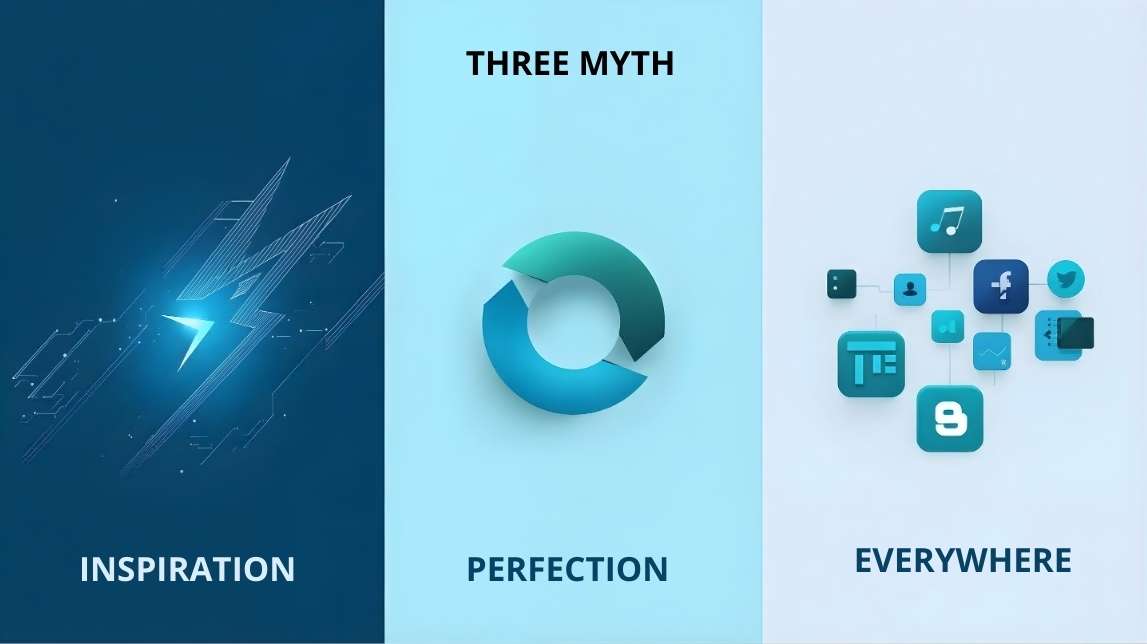
The most dangerous myth is this one: I’ll post when inspiration hits.
Inspiration is unreliable. It doesn’t care about your business goals or your growth timeline. One founder told me she waited three weeks between posts because she didn’t feel inspired. Three weeks of silence while her audience moved on to other voices.
Another myth is that quality requires endless time. Founders convince themselves that spending six hours on one article proves their commitment to excellence. But what if quality came from clarity and structure instead of time investment?
The third myth is the belief that you need to be everywhere. Instagram, LinkedIn, Twitter, TikTok, Pinterest. Founders burn out trying to maintain presence on five platforms when they haven’t mastered one.
These myths keep entrepreneurs trapped in cycles of inconsistency. They create guilt without creating results.
How lack of systems kills visibility
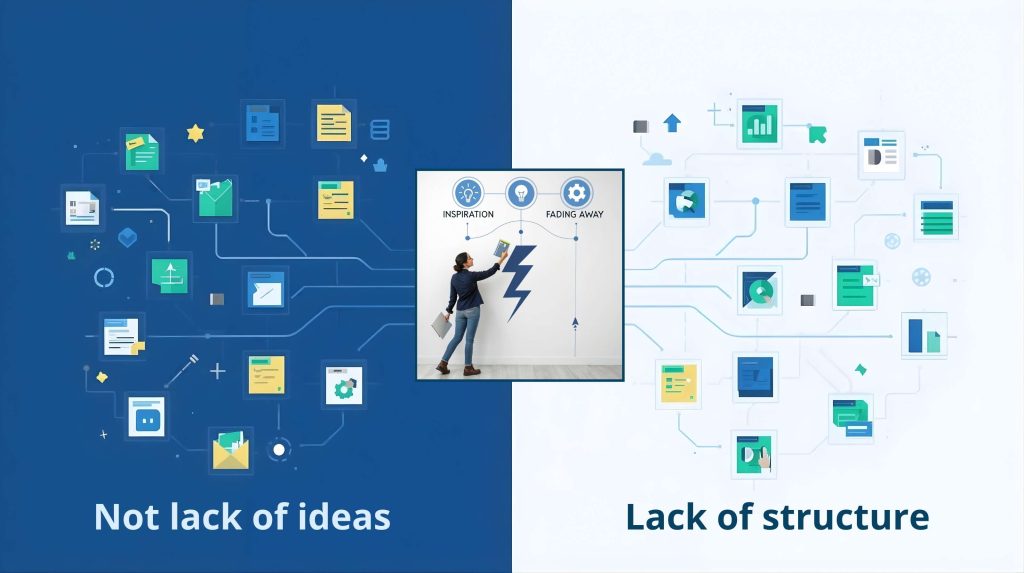
I’ve seen this pattern dozens of times. A founder has 50 content ideas saved in their phone. Notes from podcasts. Screenshots of interesting posts. Random thoughts typed at midnight.
But none of it gets published.
The problem isn’t lack of ideas. The problem is the gap between idea and execution. Without a system to transform thoughts into finished content, everything stays stuck in the ideation phase.
One entrepreneur I know kept a detailed spreadsheet of content topics. Over 100 ideas organized by theme. She felt productive maintaining the list. But her blog stayed empty because she had no process to move from topic to published post.
Systems bridge that gap. A system doesn’t care about inspiration or motivation. It’s a sequence of steps that produces output regardless of how you feel on any given day.
Without systems, your content depends entirely on willpower. And willpower is the weakest foundation you can build on.
What changes when structure becomes your foundation
Here’s what shifted for one founder I worked with. She went from publishing one article per month to one article per week. Not because she suddenly had more time. Not because she became a faster writer.
She built a workflow.
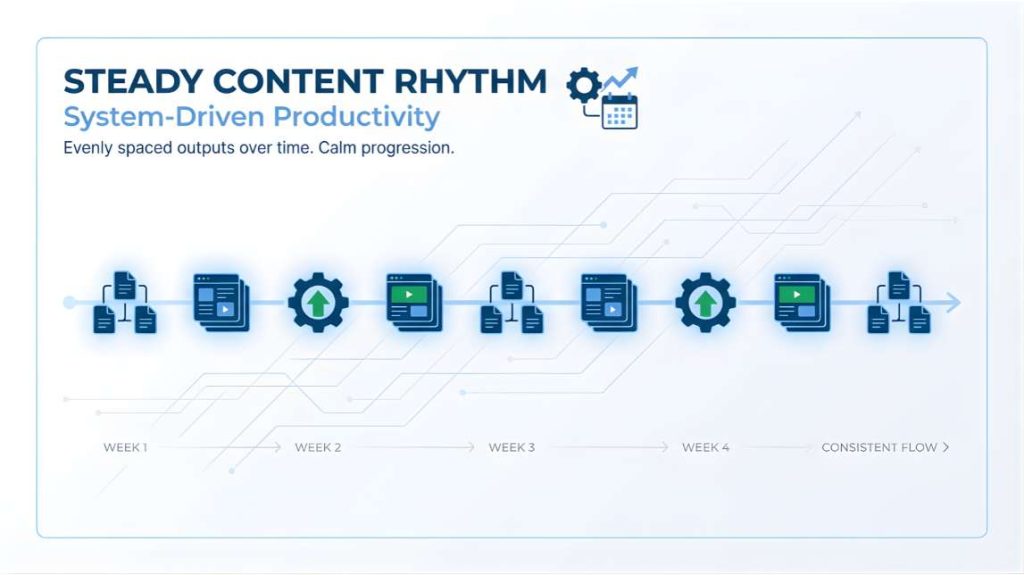
Her workflow had five simple steps. Research on Monday. Outline on Tuesday. First draft on Wednesday. Edit on Thursday. Publish on Friday. Each step took 30 to 45 minutes. The total time investment stayed the same. But the output quadrupled because she removed decision fatigue from the process.
Another founder used a content brief template. Every article started with the same structure. Target audience. Core message. Three key points. One call to action. The template eliminated the blank page problem. She spent her energy on ideas instead of format.
The transformation wasn’t dramatic. It was methodical. Small improvements compounded over weeks until the results became obvious.
This is what happens when you stop treating content like art and start treating it like a system. Art requires inspiration. Systems require execution.
The shift from chaos to method
Most entrepreneurs approach content creation backward. They start with tools and tactics. They buy subscriptions and watch tutorials. Then they wonder why nothing changes.
The real shift happens when you acknowledge that your current approach isn’t a system at all. It’s a collection of random attempts held together by guilt and urgency.
A real system has inputs and outputs. It has steps that repeat. It has quality checks built in. It runs whether you feel motivated or not.
One founder described her old process like this: “I sat down whenever I had time and tried to write something good.”
Her new process looks like this: “Every Monday I outline three posts using my saved ideas. Every Wednesday I write first drafts. Every Friday I publish.”
Same person. Same schedule. Different structure.
The shift from chaos to method doesn’t require more hours. It requires intentional design. You build the process once. Then you run the process repeatedly.
This is how solo founders compete with teams. Not by working harder. By working within systems that multiply their effort.
Building momentum through repetition
Consistency creates momentum. Momentum creates visibility. Visibility creates opportunity.
But consistency is impossible without structure. You can’t repeat what isn’t defined. You can’t improve what isn’t measured.
I’ve tested this in my own content work. When I publish on a schedule, my audience grows. When I publish randomly, my numbers plateau. The quality of individual posts matters less than the reliability of showing up.
This doesn’t mean you compromise on value. It means you separate the creation process from the publication schedule. You build a buffer. You work ahead. You remove the pressure of last-minute deadlines.
One founder keeps a rolling list of 10 drafted posts. She writes when she has energy. She publishes on schedule regardless of her current state. The separation between creation and distribution protects both quality and consistency.
This approach feels strange at first. Most entrepreneurs are used to reactive publishing. Something happens, they write about it, they post immediately. But reactive content keeps you stuck in a cycle of urgency.
Strategic content requires planning. Planning requires systems. Systems require structure.
Moving forward with clarity
The path forward isn’t about adding more hours to your week. It’s about redesigning how you use the hours you already have.
Start with one content format. Master the system for that format before expanding. Build your workflow step by step. Document what works. Remove what doesn’t.
Most importantly, stop waiting for the perfect system before you begin. Start with a basic structure and improve it through repetition. Your first workflow will be messy. Your tenth workflow will be refined. Your fiftieth workflow will feel effortless.
This is how manual chaos transforms into strategic productivity. Not through inspiration. Through method.