
You’ve heard pinterest works for affiliates. You create a few pins. Nothing happens. You try again next week. Still crickets. Meanwhile, other affiliates pull hundreds of visitors daily from pinterest to their affiliate content.
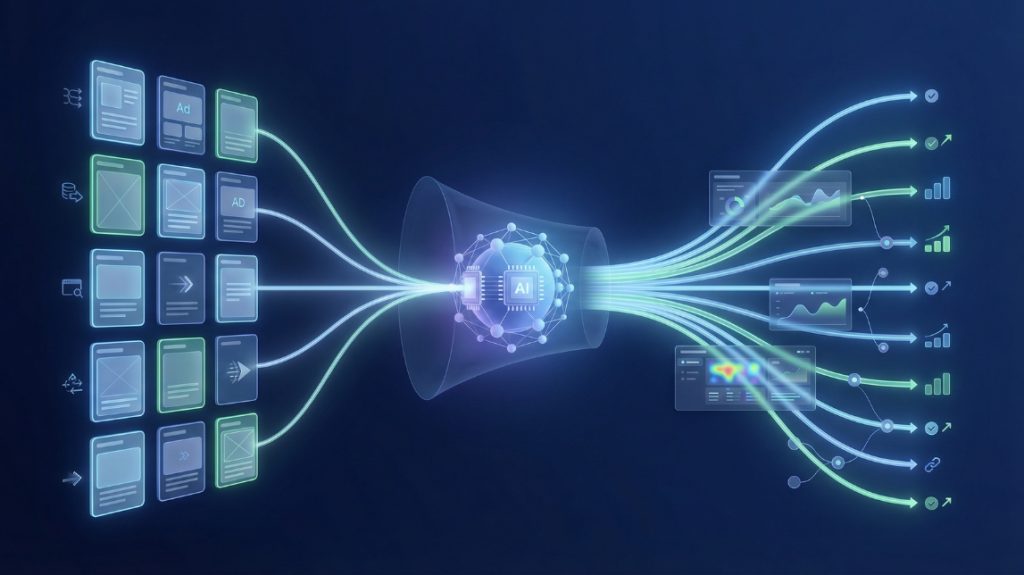
The difference isn’t pin quality or follower count. It’s volume and consistency. Pinterest rewards accounts that publish 15-30 pins daily with strong SEO and engagement signals. Doing this manually takes 2-3 hours per day. With AI, it takes 20 minutes. Pinterest affiliate marketing becomes a real traffic system only when volume is solved. AI solves the volume problem.
What you’ll get:
- Complete AI workflow for pinterest affiliate marketing (design to distribution)
- Pin creation process that produces 30+ pins in under an hour
- Optimization system that identifies winning pin styles automatically
The Pinterest opportunity: 450+ million monthly users, 80% in the US, actively searching for product recommendations. If you sell anything visual or aspirational, pinterest converts.
Table of Contents
Why Pinterest Affiliate Marketing Outperforms Other Free Channels
Pinterest affiliate marketing works because intent is already there, users search to buy, not to scroll. Pinterest isn’t social media. It’s a visual search engine. People don’t scroll for entertainment. They search for solutions: “best standing desk for home office,” “productivity apps for entrepreneurs,” “minimalist workspace ideas.”
Three reasons pinterest outperforms other free traffic channels for affiliates:
Search intent is high. Users actively look for product recommendations. When they save your pin, they’re signaling purchase consideration. That saved pin becomes a bookmark they return to when ready to buy.
Content lifespan is long. A blog post gets 48 hours of social media visibility. A pinterest pin drives traffic for 6-12 months. Create it once, benefit indefinitely.
US audience concentration. Pinterest’s user base over-indexes for US residents with purchasing power. If you target the US market, pinterest delivers exactly that audience.
The challenge has always been volume. Until AI made pin creation trivial.
The AI System for Pinterest Affiliate Marketing: Phase by Phase
Phase 1: content foundation (week 1)
You need something to link to. Pinterest drives traffic to your affiliate content, but that content must exist first.
Required assets:
- 5-10 blog posts reviewing products or comparing options in your niche
- Each post optimized for a specific product-focused keyword
- Clear affiliate recommendations within the content
AI acceleration: If you don’t have content yet, use ChatGPT to draft comprehensive product review templates. Edit for accuracy and personal experience. Publish on your blog.
For complete AI content creation workflows specifically for affiliate marketing, see our AI traffic generation system.
Phase 2: pin design automation (week 1-2)
The manual approach: open canva. Design a pin. Download. Upload to pinterest. Write description. Schedule. Repeat 30 times daily. You’ll quit within a week.
The AI approach:
Step 1: create pin templates (one-time setup)
- Open canva Pro ($13/month, essential for this)
- Use canva’s AI template generator: “create pinterest pin template for productivity tools”
- Generate 5-7 base templates in your niche aesthetic
- Save as templates with placeholder text
Step 2: mass produce pin variations
- Use canva bulk create feature
- Upload a CSV with: pin title, description, product name, key benefit
- Canva AI generates 50+ unique pins from your template in minutes
- Each pin is visually distinct but brand-consistent
Step 3: AI-powered text variations use chatGPT for pin copy:
Prompt: “Create 20 pinterest pin titles for an article about ‘best project management tools for Small teams.’ Each title should be under 100 characters, curiosity-driven, and keyword-rich.”
Output example:
- “The PM tool that saved our team 10 hours/week”
- “Why asana beats trello for remote teams”
- “5 project management tools under $50/month”
Time investment: 60 minutes to create 30 pins. Previously: 3-4 hours.
Phase 3: SEO optimization for pinterest search
SEO is the core of any Pinterest affiliate marketing system. Without it, your pins are invisible. Algorithm prioritizes pins with strong keyword signals in three places: pin title, pin description, and board name.
AI workflow for descriptions:
ChatGPT prompt: “Write 10 pinterest descriptions (under 500 characters each) for pins linking to my article ‘AI email marketing tools for small business.’ Include keywords: email marketing, automation, small business, AI tools. Each description should create curiosity and include a clear benefit.”
Board strategy:
- Create 5-10 boards matching your content categories
- Use keyword-rich board names: “Productivity tools for entrepreneurs” not “tools I love”
- Use AI to generate board descriptions with relevant keywords
The SEO multiplier: each optimized pin acts as a search result. 30 pins = 30 chances to rank for related searches.
Phase 4: scheduling and consistency
The consistency requirement: pinterest rewards accounts that pin daily. Sporadic pinning gets buried by the algorithm.
AI-assisted scheduling:
Option 1: tailwind (recommended)
- Upload your 30 pins
- Use Tailwind‘s AI scheduling: analyzes when your audience is active and schedules accordingly
- Set it to distribute pins across 30 days
- Add to queue weekly, forget about it
Option 2: pinterest native scheduler
- Free but manual
- Schedule 5-7 pins per day, 7 days out
- Repeat weekly
Time investment: 30 minutes/week to upload and schedule. Tailwind’s AI handles optimal timing.
Phase 5: Performance analysis and iteration
After 30 days, you’ll have data. Don’t guess what works. Let AI help you identify patterns.
Metrics that matter:
- Impressions (how often pins appear in search)
- Saves (signal of high intent)
- Outbound clicks (traffic to your affiliate content)
- Engagement rate (saves + clicks / impressions)
AI analysis workflow:
Step 1: export pinterest analytics (available in business account)
Step 2: feed to chatGPT with this prompt: “analyze this pinterest performance data. Identify which pin titles, images, and posting times drove the most clicks. Suggest 5 optimizations based on patterns.”
Step 3: double down on what works. If lifestyle imagery outperforms product shots, create more lifestyle pins. If question-format titles beat benefit-format, shift accordingly.
The compounding effect: Month 1 you learn. Month 2 you optimize. Month 3 your pins start ranking. Month 4-6 traffic compounds as older pins gain traction.
The complete weekly pinterest workflow with AI

Monday (30 minutes):
- Generate 20 pin titles with chatGPT
- Create pin variations in canva using bulk create
- Export pins
Tuesday (20 minutes):
- Generate 20 SEO-optimized descriptions with AI
- Upload pins to Tailwind
- AI schedules them across the week
Wednesday-Sunday (0 minutes):
- Pins post automatically
- Traffic flows to affiliate content
- You focus on other channels
Total active time: 50 minutes/week for 20-30 daily pins.
US market optimization for pinterest
Audience behavior in the US:
- Peak activity: evenings (7-10 PM EST) and weekends
- High-converting categories: home office, productivity, wellness, digital products
- Seasonal trends matter: back-to-school (Aug-Sep), holiday gift guides (Oct-Dec), new year productivity (Jan-Feb)
Pricing psychology:
- Show dollar amounts in pins when relevant ($X/month, Under $50)
- Use “budget-friendly,” “affordable,” “best value” for price-conscious searchers
- Premium products work too but need different angles (“worth the investment,” “professional-grade”)
US-specific holidays to leverage:
- Create gift guide pins 6-8 weeks before major holidays
- Tax season (Jan-Apr): financial tools, productivity software
- Summer (May-Aug): travel gear, work-from-anywhere tools
Pinterest + Email: the compound growth loop
Pinterest drives cold traffic. Email converts warm traffic. Combining them creates a self-sustaining system.
The loop:
- Pinterest pin → affiliate blog post
- Blog post offers lead magnet (checklist, template, guide)
- Visitor joins email list
- Email sequence promotes affiliate products
- Email subscribers share your pins → more Pinterest reach
AI role in the loop:
- ChatGPT creates lead magnet content (checklists, templates)
- AI generates email sequences
- Automated welcome series nurtures Pinterest traffic into buyers
For the complete AI email list building system that converts pinterest traffic into owned subscribers, see our AI email list guide for affiliates.
Common pinterest mistakes that Kill affiliate results
These mistakes are the reason most Pinterest affiliate marketing efforts stall before month two.
Mistake 1: linking pins directly to affiliate products. Pinterest penalizes this. Always link to your content (blog post, review article), which contains affiliate links. Give value first, monetize second.
Mistake 2: ignoring mobile optimization. 80% of pinterest traffic is mobile. If your blog loads slowly on mobile or has intrusive popups, you’ll get clicks but zero conversions. Test mobile experience obsessively.
Mistake 3: creating pins without search intent. “Beautiful workspace aesthetic” gets saves but doesn’t drive purchases. “Best desk lamp for video calls under $50” targets buyers. Design for beauty, write for search intent.
Mistake 4: abandoning after 30 days. Pinterest is a 90-120 day game. Your early pins won’t perform immediately. They need time to accumulate saves and search authority. Consistency wins.
Mistake 5: not testing pin styles. What works for home decor might not work for software tools. Create 3-4 distinct pin styles (minimal text, data-driven, lifestyle, before/after) and let performance data decide.
Tools and costs
Essential:
- Canva Pro: $13/month (bulk create feature is mandatory)
- Pinterest business account: free
- Tailwind: $15-20/month (optional but saves significant time)
Advanced:
- ChatGPT plus: $20/month (faster generation, better quality)
- Metricool or Later: $10-15/month (alternative to Tailwind)
Total investment: $28-68/month depending on stack. Expected ROI: If pinterest drives 100 visitors/day at 2% conversion, that’s 60 sales/month. Even at $10 commission, that’s $600/month from a $28 investment.
This week action plan
Your Pinterest affiliate marketing system starts this week. Here’s exactly what to do.
Day 1: set up pinterest business account. Create 3-5 keyword-optimized boards matching your affiliate content categories.
Day 2: design 3 pin templates in canva using AI template generator. Make them visually distinct but brand-consistent.
Day 3: generate 20 pin titles and descriptions with chatGPT for your best-performing affiliate article.
Day 4: use canva bulk create to generate 20 pins. Export and schedule for the next 7 days (3 pins/day).
Day 5: set up Tailwind (optional) or use pinterest native scheduler. Schedule your pins across optimal times.
Day 6-7: monitor which pins get early traction (saves, clicks). Create 10 more variations of the winning style.
KPIs to track:
- Pins published per week (target: 20-30)
- Monthly impressions (should grow 20-30% month-over-month)
- Pin saves (signals high intent, aim for 2-5% save rate)
- Outbound clicks to your content (should hit 50-100+ daily by month 3)
Next reads:
- AI-Powered Free Traffic for Affiliates
- AI Email List Building for Affiliates
- AI Traffic Generation System for Affiliates
The goal isn’t more AI. The goal is fewer bottlenecks. Pinterest + AI removes the volume bottleneck that stops most affiliates from succeeding on the platform.