
The most common support model in US ecommerce treats every resolved ticket as a finished interaction. The customer had a problem. You solved it. The conversation ends. AI customer service for ecommerce rewrites that logic. A customer who contacts support has identified themselves as active, engaged, and thinking about your product. That moment is not the end of an interaction. It is the highest-intent window your brand will have with that customer outside of a purchase.
The mistake is treating support as overhead. Every ticket contains a signal: a question about sizing, a complaint about delivery, a request for product advice. Each of these moments, handled with the right data and the right offer, becomes a revenue opportunity rather than a cost absorbed and forgotten.
This article covers how to build a support desk that generates revenue without sacrificing resolution quality. You will see which support moments carry the highest upsell potential, how AI identifies and triggers the right offer at the right time, and how Gorgias and Zendesk approach this problem differently for Shopify brands at different scales.
Start with why the support channel has always carried revenue potential, and why most brands have failed to capture it.
Table of Contents
Why ecommerce customer support automation is a revenue opportunity, not a cost

Ecommerce customer support automation does not just speed up ticket resolution. It creates a structured system for identifying high-intent moments in every customer interaction and responding to them with precision. The shift from reactive resolution to proactive engagement is where support revenue is built.
Most support teams are measured on resolution time and customer satisfaction score. Neither metric captures the revenue a resolved ticket could have generated. A customer who asked a product question and received a fast, accurate answer is a conversion opportunity. Without the data to see that connection, the opportunity disappears untracked.
The cost center assumption
Support is categorized as overhead because its outputs are not connected to revenue data. An agent closes 40 tickets per day. All 40 are logged as resolved. Zero are logged as resulting in a purchase. The data does not exist, so the revenue does not appear in any report, and the function is managed to minimize cost rather than maximize output.
AI-powered helpdesks change this by connecting every interaction to the customer’s order history, predicted lifetime value, and current engagement status. When that data is visible at the ticket level, the nature of the response changes. The agent, or the AI, can respond to the underlying need, not just the surface-level question.
What the revenue model actually looks like
Support-generated revenue comes from 3 sources. The first is assisted conversion: pre-purchase questions that end in a sale because the response was fast and specific. The second is upsell at the resolution moment: post-purchase recommendations placed inside a resolved ticket. The third is churn prevention: complaints handled so well that the customer buys again.
The third source is the most underestimated. A customer whose complaint was resolved with speed and a genuine recovery offer tends to generate significantly more repeat purchases than a customer who never had a problem. The resolution moment does not just save the relationship. It deepens it.
Key insight: Ecommerce customer support automation does not replace the human moment in a support interaction. It ensures that moment is connected to the right data, so the response serves both the customer’s need and the brand’s retention objective simultaneously.
A Chicago, Illinois skincare brand tracked support interactions over several months using Gorgias revenue attribution. A meaningful share of resolved tickets led to a purchase within 24 hours, revealing thousands of dollars in support-attributed revenue they had never previously measured or optimized for.
Customer service revenue generation ecommerce: the 3 support moments that drive sales
Not all support moments carry the same revenue potential. Customer service revenue generation ecommerce strategies concentrate on 3 specific interaction types where customer intent is already elevated. Knowing which moments these are determines where you place your AI triggers and how you configure each response flow.
The pre-purchase inquiry
A customer who contacts support before buying has not yet committed. They are evaluating. Questions like “does this work on sensitive skin?” or “what is your return window?” signal intent alongside hesitation. A fast, accurate, personalized answer at this moment converts at a significantly higher rate than a delayed or generic response.
In Gorgias, pre-purchase inquiries can be classified automatically and prioritized in the queue. The agent’s response template surfaces a relevant product recommendation alongside the answer. The goal is to resolve the hesitation and place the next logical product in front of the customer before they close the conversation.
The post-purchase moment
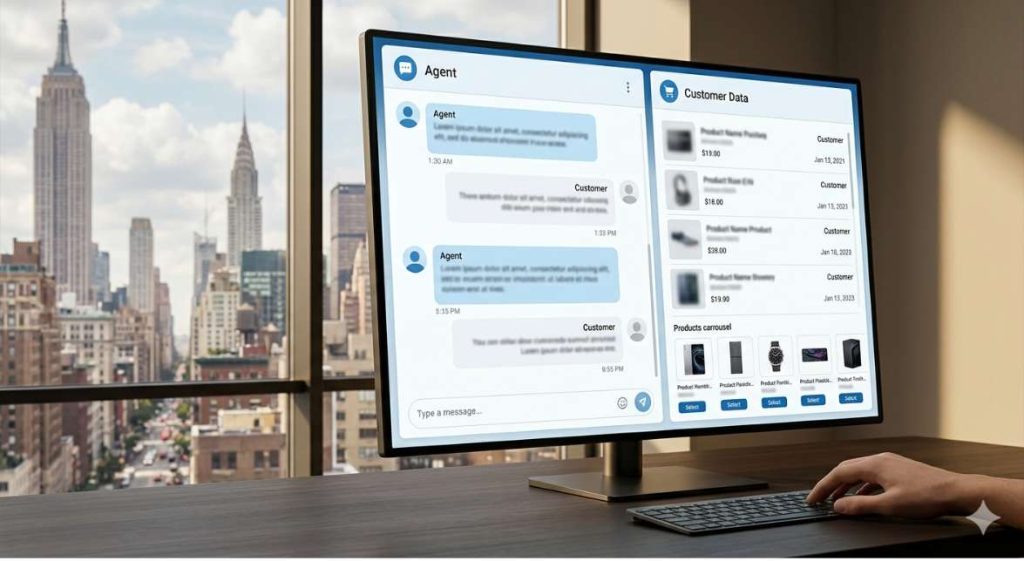
A customer who contacts support after buying is in an active relationship with your product. Questions about usage, sizing, delivery status, or compatibility are not complaints. They are relationship-deepening moments. An AI helpdesk identifies the purchased product, surfaces complementary items from the catalog, and suggests a follow-up recommendation inside the resolution message.
This is not aggressive upselling. It is a relevant extension of the purchase the customer already made. A customer who bought a face serum and asks about application frequency is a natural candidate for the matching moisturizer. The context makes the recommendation feel helpful rather than promotional.
The complaint-to-recovery moment
A customer who contacts support with a complaint is at churn risk. The instinct is to resolve the issue quickly and move on. The revenue logic is different. A well-handled complaint, resolved with a genuine recovery offer, converts an at-risk customer into a repeat buyer at a higher rate than an order that went smoothly from the start.
The recovery offer must be specific to the failure. A delayed shipment warrants a shipping credit or a small discount on the next order. A defective product warrants a replacement and a complementary item. A generic “sorry for the inconvenience” response with a 10% off code does not acknowledge the specific failure and produces lower recovery rates than a targeted response.
Key insight: The 3 moments of highest revenue potential in support are the pre-purchase inquiry, the post-purchase usage question, and the complaint resolution. Customer service revenue generation ecommerce systems configure distinct response logic for each moment, not a single upsell template applied to every ticket regardless of context.
A Portland, Oregon pet supply brand used Gorgias to classify incoming tickets by interaction type. After configuring separate response flows for each of the 3 moments, support-attributed revenue grew several times over within a couple of months. Complaint-to-recovery tickets produced the highest average order value of the 3 categories.
AI helpdesk upsell ecommerce: how to trigger the right offer from a support ticket
The upsell logic in an AI helpdesk upsell ecommerce system is triggered by ticket content, customer data, and conversation stage. It does not run on a fixed script. The AI reads what the customer is asking, cross-references their order history, and surfaces a recommendation that is contextually relevant to the current conversation.
How the triggered upsell logic works

In Gorgias, the upsell trigger is built into the macro (canned response) or the AI conversation flow. When a customer asks a usage question, the AI detects the product from the order data. It then identifies 2 to 3 complementary products and inserts a recommendation into the agent’s suggested response before the message is sent.
The agent reviews the suggestion before sending. If the recommendation is relevant, they approve it with one click. If it is not, they edit or remove it. This keeps human judgment in the loop. It also dramatically reduces the effort required to generate a relevant recommendation from scratch for every ticket.
Setting the offer rules
The offer rules determine when an upsell is appropriate and what it looks like. Set 3 constraints before building the flow. First, the customer must have at least 1 completed order. Do not upsell inside a first-time pre-purchase inquiry. Second, classify the ticket as a usage question, a sizing question, or a product compatibility question before triggering any recommendation. Do not upsell inside a complaint or a return request.
Third, the recommended product must belong to a category the customer has not yet purchased from. Recommending a product the customer already owns signals that your system does not know them. Applying these 3 rules limits upsell recommendations to a targeted share of total ticket volume. That narrower set converts at a significantly higher rate than a recommendation applied to every ticket.
For the automated delivery of follow-up offers after a support interaction closes, connect your helpdesk to your email and SMS flows. See our guide on AI email and SMS automations for ecommerce retention for the execution layer that extends the support conversation beyond the ticket.
Key insight: AI helpdesk upsell ecommerce systems produce the strongest results when the offer rules exclude as many tickets as they include. A recommendation that reaches the right share of interactions converts at a rate that justifies the entire system. A recommendation applied to 100% of tickets converts poorly and damages customer perception.
A Seattle, Washington home goods brand configured Gorgias upsell macros with 3 exclusion rules. A meaningful share of monthly tickets received a product recommendation, and the attach rate, meaning recommendations that led to a purchase, reached a strong double-digit rate. The upsell flow generated thousands of dollars in monthly revenue with no additional headcount or ad spend.
Gorgias AI ecommerce: the support platform built for Shopify retention
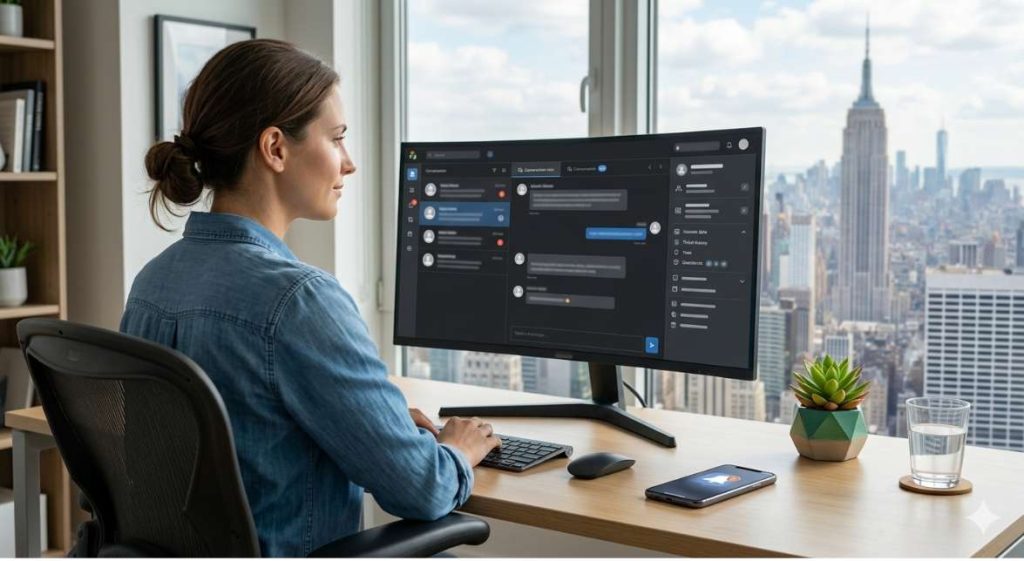
Gorgias AI ecommerce integration is native to Shopify. When a ticket arrives, Gorgias pulls the customer’s full order history into the agent’s sidebar automatically. Current cart data, loyalty tier, and lifetime value appear alongside the ticket without any manual lookup or tab switching. The agent has full customer context before composing the first response.
This data integration is the primary reason Gorgias is the default recommendation for Shopify brands at the SMB level. It removes the friction that prevents support agents from personalizing responses at scale, without requiring any custom development or third-party connectors.
What Gorgias does for revenue attribution
Gorgias tracks revenue generated by support interactions directly inside its dashboard. Every ticket that leads to a purchase within a configurable attribution window, typically 5 days, is tagged as support-attributed revenue. This makes the support channel visible as a revenue line item for the first time in most ecommerce operations.
The revenue attribution data also changes how support teams are measured. Agents are evaluated not only on resolution time but on revenue generated per ticket. This shifts the incentive structure from cost-minimization to value-creation. The cultural shift that follows is as significant as the tool change.
Gorgias AI automations and pricing
Gorgias’s AI layer handles order status inquiries, return requests, FAQs, and basic troubleshooting automatically. For most Shopify brands, a significant share of incoming tickets are fully resolved by the AI without agent involvement. The remaining tickets are triaged, classified, and routed to the appropriate agent with a suggested response already populated.
Pricing scales with ticket volume across several tiers, and AI Agent usage is billed separately per resolution on top of the base plan. For most Shopify brands under $150,000/month in revenue, the entry-to-mid tiers typically cover the primary use cases without unnecessary overhead. Check current plans on the Gorgias pricing page before committing, since AI resolution costs can shift the total significantly.
Key insight: Gorgias AI ecommerce is built for Shopify-native operations where customer context lives inside the order management system. The revenue attribution dashboard alone changes how most brands perceive their support function. If you do not currently measure support-attributed revenue, Gorgias makes that measurement automatic from day 1.
The Miami Shopify Plus cosmetics brand added Gorgias to their small support operation handling a steady volume of monthly tickets. Within the first month, Gorgias AI resolved a large share of tickets automatically. Agent time shifted from answering repetitive FAQs to handling complex inquiries and executing upsell recommendations. Support-attributed revenue appeared on the dashboard for the first time, in the thousands of dollars for that first full month of measurement.
Zendesk AI ecommerce: when the enterprise option makes sense
Zendesk AI ecommerce capabilities serve brands that operate across multiple channels, multiple storefronts, or multiple geographic markets simultaneously. Zendesk is not Shopify-native, but its Shopify connector and AI layer handle multi-channel support at a scale Gorgias is not yet fully optimized for. The routing logic, reporting depth, and enterprise integrations make it a different category of tool.
For most single-storefront Shopify brands under $500,000/month in revenue, Zendesk is more platform than the operation requires. For brands managing retail, wholesale, and direct-to-consumer support from one helpdesk, or that need deep CRM integration, the additional complexity is justified.
What Zendesk adds at scale
Zendesk’s AI Answer Bot deflects repetitive inquiries before they reach an agent, similar to Gorgias. The differentiator at scale is routing sophistication. Zendesk routes tickets based on customer tier, purchase history, language, geographic market, and inquiry type simultaneously. For brands managing 5,000 or more monthly tickets across 3 or more channels, this logic reduces handling time significantly.
Zendesk also integrates more natively with enterprise CRM and marketing platforms. For brands running HubSpot, Salesforce, or multi-market ERP systems, Zendesk connects into the existing data stack more cleanly than Gorgias. The support data flows into the broader customer record without manual export or API workarounds.
Pricing and when to make the switch
Zendesk pricing for ecommerce starts at approximately $55/agent/month and scales upward through higher Suite tiers. AI-powered automation is billed per resolution on top of the per-agent cost, so total spend depends heavily on automation volume. Check current plans on the Zendesk pricing page before committing, since the AI cost layer can change the total significantly. Gorgias prices by ticket volume rather than agent count, which makes it more cost-efficient for small teams handling high ticket volumes with AI automation handling the majority.
The practical switching point is when your support operation requires multi-market routing, multi-language AI responses, or deep enterprise system integration that Gorgias does not support natively. Below that threshold, Gorgias covers the revenue-generation use case at lower cost and with less configuration overhead.
Key insight: Zendesk AI ecommerce is the right choice when your support operation outgrows single-platform, single-market management. Below that threshold, the additional complexity and cost does not add proportional revenue-generation capability compared to a Shopify-native setup in Gorgias.
A New York, New York fashion brand managing support across 3 Shopify storefronts (US, UK, and Canada) switched from Gorgias to Zendesk after reaching a high volume of monthly tickets. The multi-market routing, language detection, and Salesforce integration justified the switch. Revenue-generation capabilities remained comparable. The primary gain was operational efficiency across markets, not incremental upsell revenue.
How to build AI customer service for ecommerce as a revenue channel

Building AI customer service for ecommerce as a revenue channel is a 4-step process. The technology is accessible in both Gorgias and Zendesk. The shift is not primarily in the tools. It is in how you define, measure, and incentivize the support function from the start.
Step 1: Define support-attributed revenue. Before touching any automation, decide what counts as a support-attributed sale. The standard definition is a purchase made within 5 days of a resolved ticket by the same customer. Configure this window in your helpdesk. This single step makes the revenue channel visible where it was previously invisible.
Step 2: Classify your ticket types. Set up 3 ticket categories in your helpdesk: pre-purchase inquiry, post-purchase question, and complaint. Each category gets a separate response flow with distinct offer logic. Pre-purchase tickets get conversion-focused responses. Post-purchase tickets get upsell recommendations. Complaint tickets get recovery offers calibrated to the specific failure.
Step 3: Build and constrain the upsell rules. Configure upsell macros or AI offer triggers for post-purchase and pre-purchase tickets only. Apply the 3 exclusion rules: minimum 1 completed order, non-complaint ticket classification, and an unowned product category recommendation. Set a maximum of 1 upsell recommendation per ticket.
Step 4: Measure and adjust weekly. Track 3 metrics for the first 60 days: support-attributed revenue per week, attach rate by ticket category, and complaint recovery rate. Adjust the attribution window, offer values, and exclusion rules based on observed conversion data, not assumptions.
Key insight: The biggest barrier to AI customer service for ecommerce as a revenue channel is not the platform configuration. It is the absence of a revenue attribution metric at the support level. Define what you will measure before building any automation, or the system will optimize for speed without generating visible revenue data.
An Austin, Texas supplements brand with a 1-person support team built their first revenue-focused support system in Gorgias in just a couple of weeks. They defined 3 ticket categories, configured 2 upsell macros, and set a 5-day attribution window. Within about a month and a half, support-attributed revenue reached several thousand dollars per month across a healthy volume of monthly tickets, with no additional headcount.
AI customer service for ecommerce is not a cost center that happens to resolve complaints efficiently. It is an active revenue channel when the right data, offer logic, and measurement system are in place. Every support ticket is a customer-initiated conversation. What you do in that conversation determines whether it closes at resolution or opens at a sale.
The decision is not whether to use AI in your support desk. Competitive Shopify brands are already moving in this direction. The decision is whether your support system is configured to convert inquiry into revenue or simply to close tickets faster than before.
3 steps to start this month:
- Set up a 5-day revenue attribution window in Gorgias or Zendesk and measure what your support desk already generates without any optimization.
- Classify incoming tickets into the 3 interaction types and build a separate response flow with distinct offer logic for each category.
- Configure upsell recommendations for the tickets that meet your offer criteria and track the attach rate weekly for 30 days.
For the broader customer retention system this support channel feeds into, read our guide on how US SMBs build AI-powered loyalty systems that drive repeat sales.