
Jumping into AI tools without strategy creates chaos. Entrepreneurs often collect subscriptions but see no real results. The missing piece? A clear content roadmap aligned with business goals. Before selecting tools, you need defined pillars, formats, and metrics that matter. This strategic foundation transforms AI from a shiny object into a revenue driver.
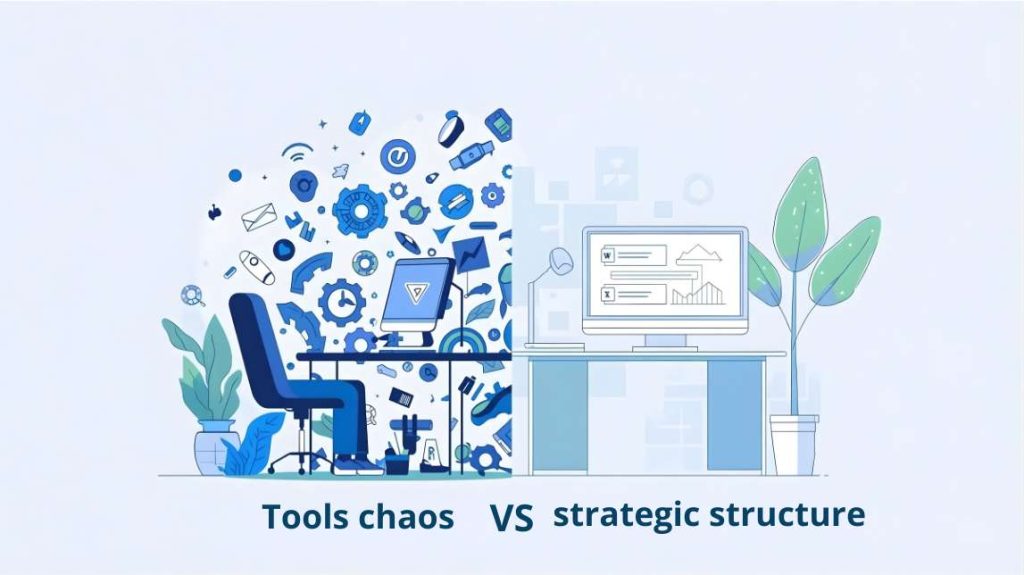
From random posts to a strategic roadmap
I’ve watched entrepreneurs make the same mistake over and over. They sign up for three AI writing tools in one week. They spend hours learning interfaces and testing features. Then they sit down to create content and realize they have no idea what to write about.
The tools work perfectly. But the strategy is missing.
One founder I know named Katy posted whenever she felt like it. Some weeks she published five times. Other weeks nothing. Her content covered whatever topic caught her attention that day. Marketing tips. Personal stories. Industry news. Random observations.
Her audience stayed small because nobody knew what to expect from her. There was no through line. No clear positioning. Just noise.
Then Katy shifted her approach. She mapped out a content roadmap aligned with her service offerings. Every week she published content that moved potential clients closer to understanding her methodology. Her posting became predictable. Her message became clear.
Within three months her consultation requests doubled. Same person. Same skills. Different strategy.
This is what happens when you build structure before you build volume.
Choosing your core content pillar
Most entrepreneurs try to cover everything. They want to be helpful to everyone. So they write about productivity and leadership and technology and personal growth and business strategy.
The result is a confused audience and an exhausted creator.
A consultant I worked with faced this exact problem. He posted about six different topics across his channels. His engagement was terrible. People didn’t know what he stood for.
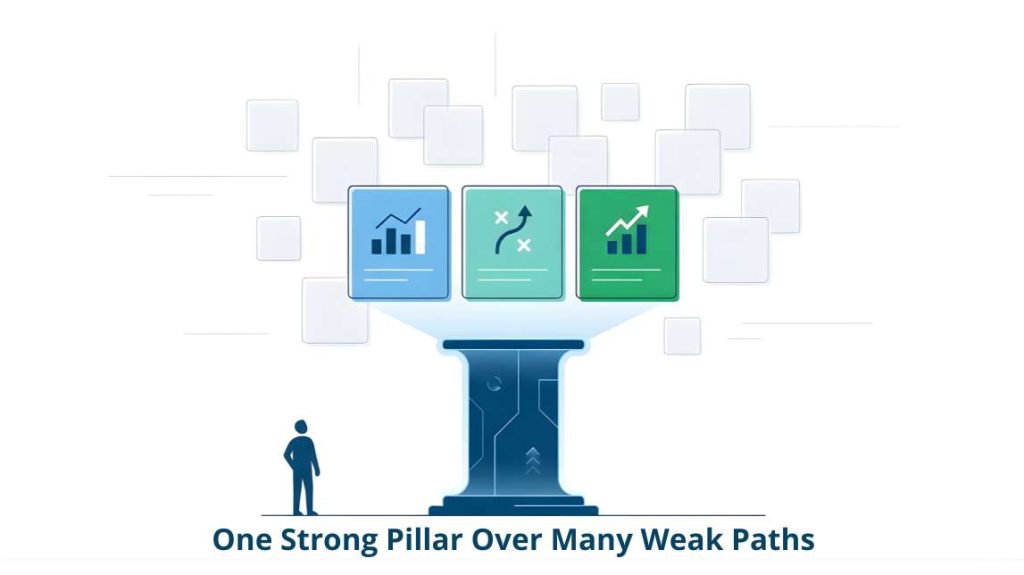
We narrowed his focus to one core pillar: AI productivity. That was it. Every piece of content connected back to that single theme. Blog posts. Email newsletters. Social media. All focused on helping entrepreneurs work smarter with AI.
His content output actually decreased. But his impact increased dramatically. People started recognizing him as the AI productivity person. They knew what to expect. They knew when to reach out.
Choosing one pillar feels limiting. It feels like you’re leaving opportunities on the table. But in reality you’re creating clarity. And clarity is what converts audience into clients.
Your core pillar should connect directly to your business model. If you sell coaching on time management, your pillar is productivity systems. If you offer consulting on digital marketing, your pillar is growth strategies.
The pillar isn’t everything you know. It’s the one thing you want to be known for.
Define the topics and angles AI can amplify
Once you have your pillar, you need angles. Angles are the different ways you approach your core topic. They give you variety without losing focus.
One entrepreneur used a simple angle formula: before versus after. Every piece of content showed the transformation AI created in a specific workflow. Before AI in email marketing. After AI in email marketing. Before AI in content planning. After AI in content planning.
This single angle generated dozens of posts. LinkedIn carousels. Email sequences. Video scripts. YouTube descriptions. All from the same basic framework.
Another founder used the comparison angle. AI tool A versus AI tool B. Manual process versus AI-assisted process. Beginner approach versus advanced approach.
The key is choosing 3 to 5 angles you can repeat consistently. You’re not creating new content from scratch every time. You’re applying your proven angles to different topics within your pillar.
This is how solo founders produce content like teams. They don’t have more ideas. They have better systems for executing ideas.
Set meaningful metrics that drive revenue
Most entrepreneurs track the wrong numbers. They celebrate when a post gets 500 impressions. They feel defeated when engagement drops for a week.
But impressions don’t pay bills. Engagement doesn’t guarantee revenue. Vanity metrics feel good without moving your business forward.
One founder I know shifted his entire measurement approach. He stopped tracking likes and started tracking qualified leads. Every piece of content had one job: move someone from stranger to conversation.
He measured consultation requests. Email signups from specific lead magnets. Direct messages asking about his services. These metrics connected directly to revenue potential.
His content strategy changed immediately. He stopped writing posts designed for maximum reach. He started writing posts designed for maximum relevance to his ideal clients.
His follower count grew slower. But his revenue grew faster. That’s the difference between vanity metrics and business metrics.
When you define what success actually means for your business, your content becomes intentional. You stop chasing trends and start building assets.
Align content with your business model
Your content strategy only works if it supports your business model. A consultant needs different content than a course creator. A freelancer needs different content than an agency owner.
I learned this the hard way in my own content work. I was creating educational posts that built authority but didn’t generate client conversations. People appreciated my content. They just didn’t hire me.
The disconnect was simple. My content answered questions people had before they were ready to invest. I needed content that spoke to people actively looking for solutions.
So I adjusted. I still created educational content. But I added strategic pieces that addressed buying concerns. Pricing structures. Process timelines. Results expectations. The practical questions people ask before committing.
My content mix shifted from 100% educational to 70% educational and 30% conversion-focused. That small change doubled my consultation bookings.
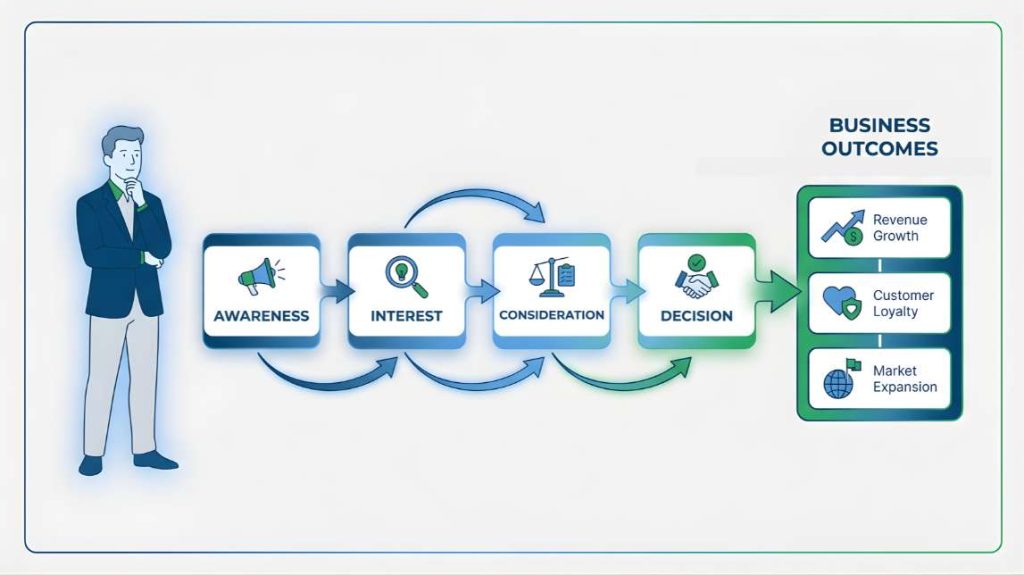
Your content should move people through a journey. Awareness. Interest. Consideration. Decision. Each stage needs different content. Each piece should have a clear role in your overall strategy.
Build your strategic foundation
Strategy isn’t complicated. But it is intentional. You need to answer four questions before you touch any AI tool.
What business outcome am I working toward? More leads. More sales. More authority. Pick one primary goal.
Who am I trying to reach? Be specific. Not entrepreneurs. Not small business owners. The exact person who needs what you offer.
What’s my core message? The one thing you want to be known for. Your positioning in one sentence.
How will I measure success? Choose metrics that connect to revenue or opportunity.
These four answers become your filter. Every content idea gets tested against them. If it doesn’t align, you don’t create it. This is how you avoid the trap of random posting.
One founder keeps these questions printed above her desk. Before she creates anything, she checks alignment. This simple habit saved her from wasting hours on content that looked good but accomplished nothing.
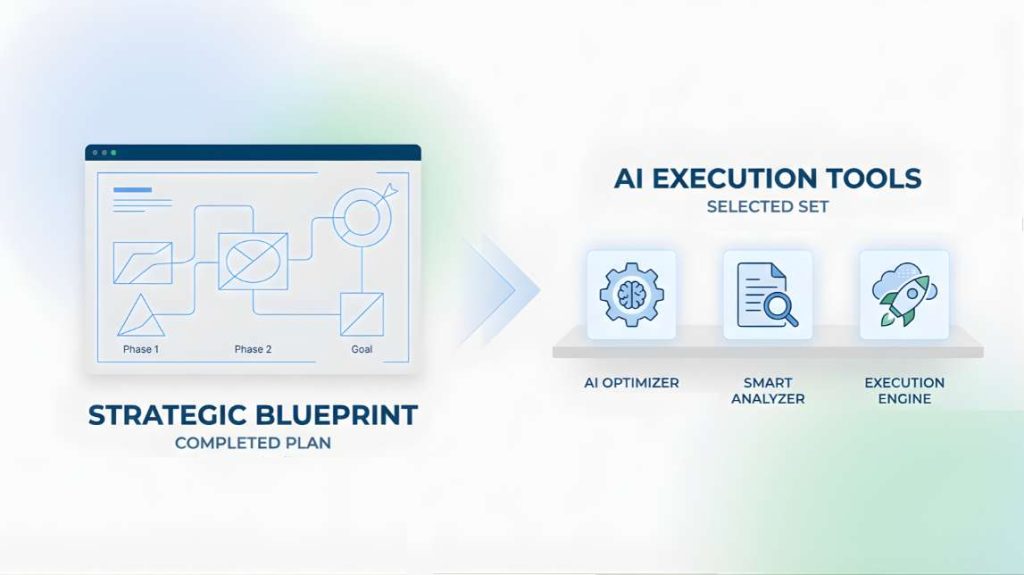
Strategy first. Tools second. This sequence protects you from collecting subscriptions that gather dust while your business stays stuck.
Moving from strategy to execution
Once your strategy is clear, the tools make sense. You know what you need them to do. You can evaluate options based on how well they support your specific goals.
Without strategy, every tool looks promising. With strategy, most tools become irrelevant. You’re not looking for features. You’re looking for solutions to defined problems.
This clarity makes tool selection fast. You skip the endless research phase. You pick what works for your use case and move forward.
The next step is building your actual stack. Not 15 tools. Not every platform your competitors use. Just the essential tools that cover research, creation, and distribution for your specific strategy.
That’s exactly what we break down in our guide to selecting the best AI productivity tools for content creation.