
Finding the best AI agents for ecommerce is now a priority for online store owners. Running a store demands constant attention: customer support, inventory management, content creation, and order tracking. Every day, the same tasks come back. And you find yourself keeping the machine running instead of growing your business. The best AI agents for ecommerce change this reality. Not by replacing everything, but by handling repetitive operations with precision. They work 24/7 without constant supervision and free up your time for what really matters: growing your business. Here’s how to choose and deploy the best AI agents for ecommerce that match your situation.
Table of contents
What is an AI Agent in Ecommerce
An AI agent isn’t a simple chatbot. It’s an autonomous system capable of analyzing a situation, making a decision, and executing an action. Without human intervention at every step. In practice: Your customer writes where is my order. A basic chatbot responds with a generic message. An AI agent consults your delivery system, identifies the tracking number, checks the status in real time, and provides a precise answer. If the delivery is delayed, it can create a priority ticket for your team. The difference lies in autonomy. The agent understands context, accesses necessary data, and acts according to rules you have defined. This is exactly what makes the best AI agents for ecommerce a game-changer for online store operations.
The difference lies in autonomy. The agent understands context, accesses necessary data, and acts according to rules you have defined. This is exactly what makes the best AI agents for ecommerce a game-changer for online store operations.

The four priority automation zones
Not all agents are equal. Choosing the best AI agents for ecommerce means focusing on four specific areas that deliver immediate ROI.
Automated customer support
Support often represents a significant portion of operational time in small ecommerce teams. This is where AI agents show their value quickly. Tools like Tidio or Zendesk AI analyze incoming requests and automatically resolve standard questions. Order tracking, return policy, product availability, delivery times. Everything that doesn’t require human judgment.
The rule works well. If your agent correctly handles the majority of requests without escalation, you have a viable system. Below that, you create customer frustration. Above that, you’re truly optimizing.
A client recently shared her experience with Intercom. After three months, her agent handled the majority of incoming requests. Her support team was significantly reduced. The freed up members joined the product team to improve listings and reduce questions upstream.
Personalization and recommendations
The best AI agents for ecommerce transform how visitors discover your products. They analyze browsing behavior and suggest relevant products in real time. Nosto and Dynamic Yield excel in this area. They observe what a visitor views, how long they stay on a page, what they add then remove from cart. From these signals, they adjust displayed recommendations.
The impact on average cart value is measurable. A cosmetics store saw their average cart increase measurably after integrating Nosto. Not by magic, but because the suggestions presented actually matched purchase intentions.
The common mistake is automating everything from the start. Begin with one product category with a solid sales history. Test, measure, adjust. Then expand.

Intelligent advertising management
Managing Meta Ads or Google Ads campaigns requires daily monitoring. Adjusting bids, disabling underperforming audiences, redistributing budget toward what works. It’s time-consuming and often reactive.
Agents like Madgicx or Adext automate these adjustments continuously. They analyze performance every hour and modify parameters according to your goals. Cost per acquisition too high on an audience, the agent reduces the budget. A creative performs well, it increases exposure.
A dropshipping client reduced their CPA significantly in three weeks with Madgicx. Not by changing their strategy, but by letting the agent react faster to market fluctuations. Manual adjustments lag behind. Agents act in real time.
Key insight: These tools work better when you already have running campaigns. If you’re starting from scratch, first build a sufficient database. An agent without history cannot optimize effectively.
Inventory forecasting and management
The best AI agents for ecommerce prevent two costly inventory mistakes: stockouts on best-sellers and surplus on slow-moving items. Both situations cost money. AI agents like Inventory Planner or Cogsy analyze your sales history, identify seasonal trends, and predict future demand.
Key insight: You order the right quantities at the right time. Less cash tied up, fewer expired products, fewer lost sales.
A clothing store reduced their stockouts significantly in six months with Inventory Planner. The agent detected recurring demand spikes that the team had not identified manually. Simple adjustments in the restocking calendar were enough.

How to choose the right agent for your situation
Choosing the best AI agents for ecommerce starts with three criteria that match your store’s reality.
Volume of operations. If your order volume is still low, an inventory forecasting agent is premature. Focus on customer support and personalization. These two areas deliver value from day one.
Integration with your tech stack. The best AI agents for ecommerce integrate natively with Shopify, WooCommerce, or your platform. An agent requiring custom development is expensive and time-consuming. Favor plug-and-play solutions with native APIs.
Desired level of control. Some agents operate in fully autonomous mode. Others require human validation before acting. If you’re starting out, opt for semi-automatic mode. You keep control while reducing your workload.
Three-months implementation roadmap
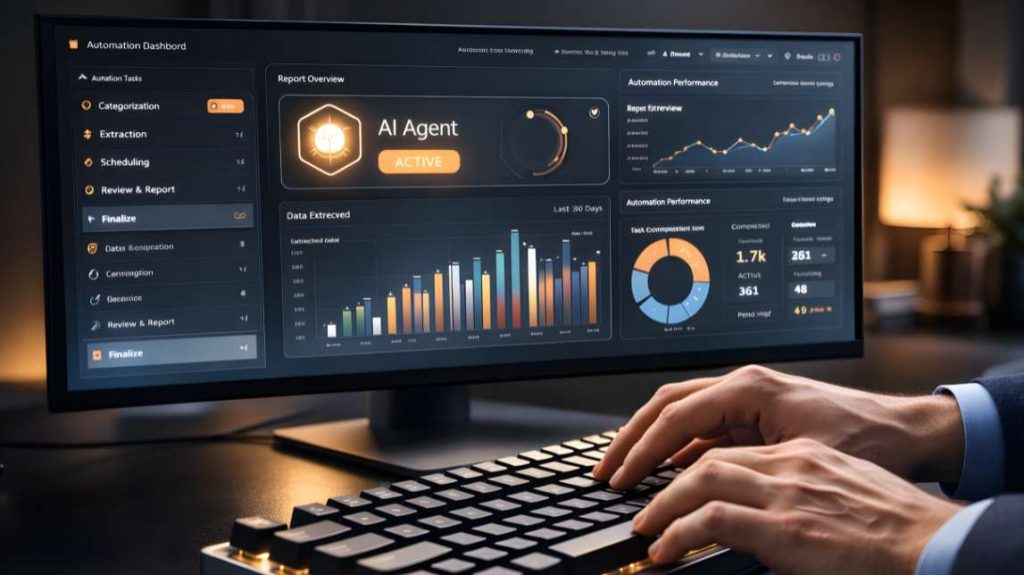
Deploying the best AI agents for ecommerce simultaneously creates confusion. A progressive approach works better.
Month 1. Customer support. Install a chat agent and configure automatic responses for your most frequent questions. Measure the resolution rate without escalation. Adjust scripts based on customer feedback.
Month 2. Product recommendations. Integrate a personalization engine on your homepage and product pages. Track the evolution of average cart and conversion rate. Test different placements for suggestions.
Month 3. Advertising or inventory depending on your priority. If you invest a significant budget in ads, automate campaign management. If your inventory poses problems, install a forecasting agent.
This sequence allows progressive learning. Each month, you master one of the best AI agents for ecommerce before adding the next. You avoid technical overload and costly errors.
Mistakes to absolutely avoid
Poorly calibrated automation does more damage than it delivers benefits. Three traps come up regularly when deploying the best AI agents for ecommerce.
Automating without sufficient data. An agent needs history to function correctly. If your store has existed for less than three months, focus on data collection before installing complex agents.
Not supervising the first weeks. A well-configured agent operates autonomously. But the first two weeks require daily monitoring. Check actions taken, responses provided, automated decisions. Adjust rules if necessary.
Wanting to automate everything at once. Each agent modifies your operations. Adding multiple agents simultaneously makes identifying problems impossible. One agent at a time. Test, validate, move to the next.

What You Should Take Away From This
The best AI agents for ecommerce do not replace your expertise. They eliminate repetitive tasks that prevent you from growing your business. Customer support, product recommendations, advertising management, inventory forecasting. These four areas offer quick ROI.
Start small with a customer support agent. Measure results and if the resolution rate is satisfactory, add a second agent. Otherwise, adjust the first before going further.
Effective automation builds in successive layers. Not in one week, but typically over three to six months. Each added agent frees up time that you reinvest in growth.
Your next step: build the complete system that connects all these agents into one coherent operation.→ AI Ecommerce Automation: Proven Workflows, Systems and Tools to Scale Your Store